
What That One Big, Beautiful Bill Act May Mean for You or Your Business
Share This Post

Depending on how you voted in 2024 or which media outlets you follow, you might think the One Big, Beautiful Bill Act (OBBBA) is either a historic win or a major letdown. Since clients have been asking for our take, we want to share what we know and believe about the bill.
Passed by the U.S. House of Representatives on May 22, 2025, and passed this morning by the United States Senate, the bill includes 300-plus provisions, including one that seeks to extend the provisions of the 2017 Tax Cuts and Jobs Act, which are set to expire at the end of 2025. But there’s much more to it than that.
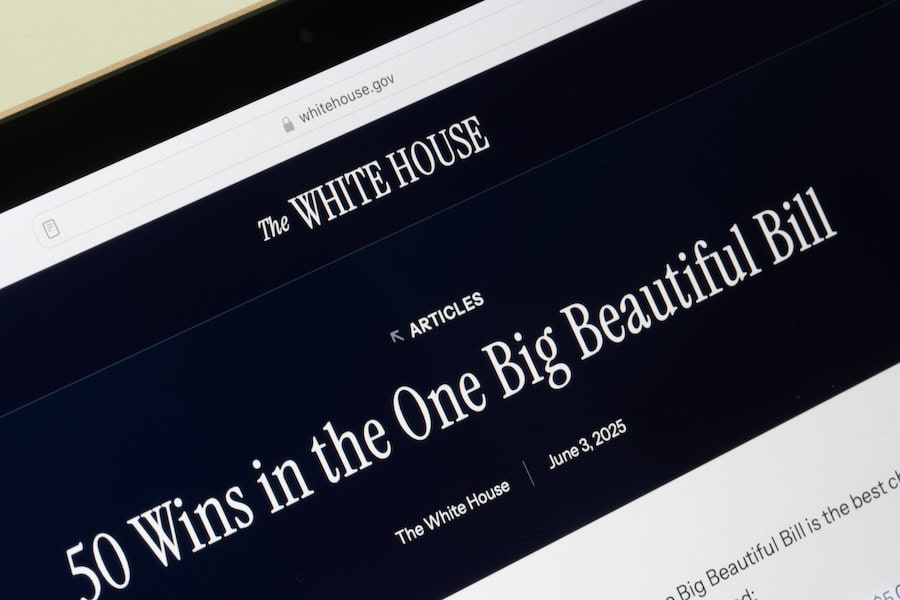
While changes are expected as the legislation moves back to the House of Representatives for another vote, many provisions will likely survive the legislative process. This summary covers the main individual and business tax provisions broken down into the following four sections:
- New above-the-line deductions (tips, overtime pay, and vehicle loan interest)
- Business depreciation and expensing provisions (to encourage new investments in production property and equipment)
- Business interest expense limitation (to prevent excessive interest deductions that would reduce a business’s taxable income too aggressively)
- Clean energy credit rollbacks (to reduce subsidies for clean energy technologies)
New Above-the-Line Deductions
President Trump’s campaign promises are reflected in three above-the-line deductions proposed in the OBBBA. (An above-the-line deduction is one that reduces the adjusted gross income [AGI] used to calculate how much federal income tax is owed. It does not affect the amount of Social Security and Medicare tax owed.)
Here are the three new above-the-line deductions proposed in the OBBBA:
- A tax deduction for tip income (“no tax on tips”)
- A tax deduction for overtime pay (“no tax on overtime”)
- A tax deduction for interest paid on loans used to buy certain vehicles manufactured in the United States
Tax Deduction for Tip Income
The proposed “no tax on tips” deduction is for certain tips reported on W-2s and other tax forms. With one out of every 30 workers in the U.S. depending on tips to make ends meet, a tax deduction for tip income is an essential need for some.
Here are the requirements to qualify: Continue reading… Continue reading… Continue reading…