Should I File for an Extension with the IRS?

By |2022-03-31T11:49:30-07:00March 31, 2022|Categories: Taxes|Tags: , , , |0 Comments

With the federal income tax return filing deadline fast approaching (April 18, 2022, for the 2021 tax year), every day you don’t have your taxes filed can send your psyche soaring to new levels of anxiety.

Maybe you’re waiting for addition documentation — a corrected 1099 perhaps, or a schedule K1. Or maybe you’re a born procrastinator. Whatever the reason, give your anxieties a break, because the feds (and most state taxing authorities) will give you a two-month grace period.
What’s the catch? Actually, there are two important stipulations:

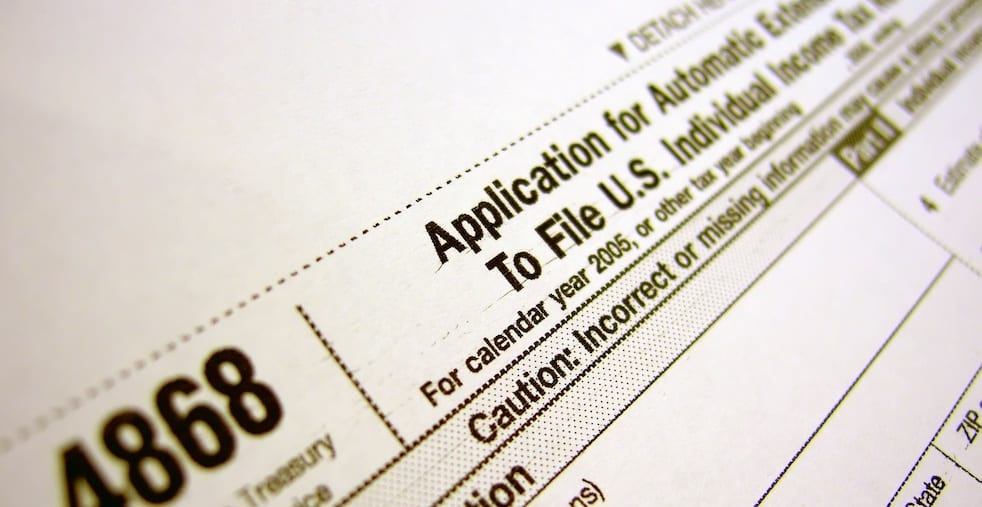
  • First, you need to apply for an extension by filing Form 4868 with the IRS. The deadline for submitting this form is the same as the deadline for filing your taxes.
  • Second, you must pay what you owe. This is usually the dealbreaker, because most people don’t know what they owe until they (or their CPA firm or accountant) prepare their tax return. So, if you’re going to file for an extension, you need to estimate what you owe and pay that when you file for the extension. If you crunch the numbers and are fairly certain you’ll get a refund, then no worries — meaning you don’t have to pay more money than you’ll eventually get back. However, if you owe anything, you’ll be charged penalties and interest for underpayment of taxes.

In this post, I answer the most commonly asked questions about tax extensions that we receive here at SWC. If your tax extension question isn’t answered below, drop our office a note using our online Contact form, or call us during business hours at (858) 487-4580.

Tax Filing Extensions FAQs

Q: What if my application for a tax filing extension is rejected?

Continue reading… Continue reading… Continue reading…

Avoid Tax Sticker Shock: Review Your Income and Withholdings

By |2022-03-22T16:46:44-07:00March 22, 2022|Categories: Taxes|Tags: , , , |0 Comments

Nobody likes to get whacked at the end of the tax year with a higher-than-expected income tax bill or a smaller-than-expected refund, but that’s what happens when you don’t have enough money withheld from your paychecks or aren’t paying enough in estimated taxes.

The United States operates a pay-as-you-go tax system, which means you as a taxpayer are expected to pay taxes on your income as you earn it, not just at the end of the year. If you owe too much at the end of the year, the government charges you a penalty. You can think of it as interest on what you underpaid for the time you underpaid.

To avoid a nasty surprise when you’re preparing your tax return at the end of the year, review your income expectations and withholdings (and estimated taxes) at the beginning of the year and adjust as needed. This is especially important if you have any self-employment or investment income or income from other sources.

Using the IRS’s Tax Withholding Estimator

To help you determine your correct tax withholding, the Internal Revenue Service (IRS) provides an online Tax Withholding Estimator that you can use for free to determine whether you need to do one of the following:

  • Complete a new Form W-4, Employee’s Withholding Allowance Certificate and submit it to your employer
  • Make or modify your estimated tax payment to the IRS

Before you start, gather your income documents, including these: Continue reading… Continue reading… Continue reading…

SWC’s 10 Point Identity Theft Recovery Action Plan Means You Can Close the Barn Door

Despite huge advances in cyber security, identity and digital wallet theft is on the rise, and experts cite a perfect storm of circumstances as a major reason.

For one thing, more people are working from home, and they’re working without the protections of corporate networks which are more reliable at blocking phishing schemes than home networks are. In addition, there are more transactions being handled online these days, including the electronic forwarding of unemployment checks and other government benefits.

Then there are the lingering fears about COVID that make some people vulnerable to online tactics dreamed up by nefarious hackers that enable them to steal your personal information and access your online accounts. And having more of your information stored in the cloud doesn’t help matters in the least.

We’ve all heard the expression about “shutting the barn door after the horse has bolted.” It’s a folksy idiom that means it’s too late to try and stop something that has already happened. It’s a futile effort because, of course, the horse is history.

Unfortunately, even if you are being careful and doing all the right things to prevent identity theft, you can still fall victim to it. That’s why it is so important to know how to recover when the unforeseeable and unavoidable happens to you.

Which is why, in this post, I present SWC’s 10 Point Identity Theft Recovery Action Plan.

(Click for free download — Identity Theft Recovery Action Plan.)

Rest assured that, as your trusted tax planning and financial strategy adviser, we take every precaution to safeguard your personal information, and we’re here to help. If you’ve fallen victim to identity theft, call our offices to find out how we can be of service. We’ll get your wayward steed back in the stall.

Step 1: Don’t Panic

Fear increases your vulnerability to identity theft. Panic makes it worse. You’re not legally liable for crimes that other people commit using the personal information they stole from you. So just scratch that concern off your list.

Likewise, if someone used your personal information to steal from you, you should be able to get your money back. For example, if a con artist filed a fraudulent tax return using your name and their address to steal your tax refund, the Internal Revenue Service (IRS) still owes you that refund.

Pro Tip: While you shouldn’t panic, you should act with a sense of urgency. The faster you do all the right things, the less damage you’re likely to suffer, and the greater the chances the perpetrator of the crime(s) will be caught and brought to justice.

Keep a detailed record of all the steps you take to curtail the damage, along with all the documentation you collect along the way. A written record will smooth the path to recovering any losses and protecting you from any losses that others (for example, your bank or creditors) may suffer as a result.

Step 2: Contact All Organizations That May Be Impacted

Although identity theft involves your personal information, it also impacts companies and organizations you do transactions with, so be sure to involve them in your recovery plan: Continue reading… Continue reading… Continue reading…

Go to Top