
What That One Big, Beautiful Bill Act May Mean for You or Your Business

Depending on how you voted in 2024 or which media outlets you follow, you might think the One Big, Beautiful Bill Act (OBBBA) is either a historic win or a major letdown. Since clients have been asking for our take, we want to share what we know and believe about the bill.

Passed by the U.S. House of Representatives on May 22, 2025, and passed this morning by the United States Senate, the bill includes 300-plus provisions, including one that seeks to extend the provisions of the 2017 Tax Cuts and Jobs Act, which are set to expire at the end of 2025. But there’s much more to it than that.

Graphic for the One Big Beautiful Bill

While changes are expected as the legislation moves back to the House of Representatives for another vote, many provisions will likely survive the legislative process. This summary covers the main individual and business tax provisions broken down into the following four sections:

  • New above-the-line deductions (tips, overtime pay, and vehicle loan interest)
  • Business depreciation and expensing provisions (to encourage new investments in production property and equipment)
  • Business interest expense limitation (to prevent excessive interest deductions that would reduce a business’s taxable income too aggressively)
  • Clean energy credit rollbacks (to reduce subsidies for clean energy technologies)

New Above-the-Line Deductions

President Trump’s campaign promises are reflected in three above-the-line deductions proposed in the OBBBA. (An above-the-line deduction is one that reduces the adjusted gross income [AGI] used to calculate how much federal income tax is owed. It does not affect the amount of Social Security and Medicare tax owed.)

Here are the three new above-the-line deductions proposed in the OBBBA:

  1. A tax deduction for tip income (“no tax on tips”)
  2. A tax deduction for overtime pay (“no tax on overtime”)
  3. A tax deduction for interest paid on loans used to buy certain vehicles manufactured in the United States

Tax Deduction for Tip Income

The proposed “no tax on tips” deduction is for certain tips reported on W-2s and other tax forms. With one out of every 30 workers in the U.S. depending on tips to make ends meet, a tax deduction for tip income is an essential need for some.

Here are the requirements to qualify: Continue reading… Continue reading… Continue reading…

Tax Planning for a Second Trump Presidency

By |2025-07-10T10:34:21-07:00November 13, 2024|Categories: Tax Credits, Tax Planning|Tags: , , , , |0 Comments

The votes are in, the winner has been declared. Now’s the time to start planning your taxes around the second Trump presidency (2025-2028). Of course, taxes aren’t entirely within the purview of the President of the United States — only Congress has the power to change the tax code. However, the president has tremendous influence over it.

For his part, the president proposes tax policies that can influence public opinion, rallies Congress to pass tax legislation, and has the power to veto any tax legislation proposed by Congress. And while the president can’t change the tax code through executive orders, he can direct agencies to implement certain tax policies or interpretations and pay less attention to others.

Graphic for Tax planning in the 2nd Trump presidency

So, what changes to the tax code can we expect from a second Trump presidency? In many ways, we can expect to see more of the same — an extension of many of the provisions in the Tax Cut and Jobs Act (TCJA) that Congress approved in late 2017 near the middle of the first Trump presidency. In addition, we can likely count on additional tax relief to promote growth and increase take-home pay for workers.

In this post, we review key provisions of the TCJA, which will expire at the end of 2025 unless Congress acts to extend them, and we highlight changes to the tax code that Trump proposed during his campaign.

Tax Cut and Jobs Act Provisions That Are Set to Expire in 2025

Many of the TCJA provisions were intended to be temporary. Unless Congress acts to extend them, the following provisions are set to expire at the end of 2025: Continue reading… Continue reading… Continue reading…

What You Need to Know About the Research and Development Tax Credit

By |2023-09-20T14:21:35-07:00September 20, 2023|Categories: Tax Credits|Tags: , |0 Comments

When we initially meet with small business clients, they sometimes lament that the federal government isn’t as supportive of their contributions to society as they’d like. They envision a world where innovation not only fuels their business growth but also earns them a significant tax break.

As it turns out, in some respects, this is already a reality. The Credit For Increasing Research Activities (aka, the Research and Development (R&D) Tax Credit) — which first appeared as part of the Economic Tax Recovery Act of 1981 — is an often-overlooked tax incentive that serves as a powerful tool that may put money back into your business’ pocket for the inventive work you’re already doing. In this blog post, we share what you need to know to take advantage of this important tax credit.

Graphic for research and development tax credit

If any part of your business involves designing, developing, or improving products, processes, formulas, or software, be sure you’re claiming a federal Research and Development (R&D) Tax Credit and any R&D tax credits your state may be offering to offset the costs of these activities. The federal benefit provides a dollar-for-dollar credit against your business tax for the costs of performing R&D activities.

Qualified expenses include:

  • W2 wages paid to employees involved in the R&D activity
  • Supplies (including tangible property, extraordinary utility costs, and server leasing costs) used for the R&D activity
  • Contract R&D-related costs that would qualify if they were conducted by regular employees

Qualifying for the R&D Tax Credit: The Four Criteria

To qualify for the Research and Development (R&D) Tax Credit, your company’s R&D activities must be conducted within the United States and must meet all of the following four criteria: Continue reading… Continue reading… Continue reading…

New Tax Credits Can Offset the Costs of Energy-Efficient Home Improvements

With energy costs soaring, some homeowners are looking for ways to make their homes more energy efficient. However, energy-efficient home improvements can be quite costly.

To make these improvements more affordable, the federal government offers tax credits to offset the costs, while some state and local governments offer additional tax credits. Thanks to the Inflation Reduction Act of 2022, two substantial federal income tax credits for energy-efficient home improvements have been extended and expanded:

  • The residential clean energy credit
  • The energy efficient home improvement credit

In this post, we cover these credits and the steps you need to take to claim them.

Tax Credits Can Offset the Costs of Energy-Efficient Home Improvements

The Residential Clean Energy Credit

The federal income tax credit for eligible energy saving home improvements, formerly called the residential energy efficient property credit, is now called the residential clean energy credit. Before explaining how the credit has changed, let’s look at how it works under the “old rules” for eligible home improvements made in 2020–2022.

The Old Rules — for 2020–2022

The residential energy property credit varies, depending on when you had the work done:

  • 26 percent of qualified expenditures for energy-saving home improvements in 2020–2021
  • 30 percent of qualified expenditures for energy-saving home improvements in 2022 (thanks to the Inflation Reduction Act)

Note that there are no income limits. Even billionaires can take advantage of these tax credits. And given the high cost of many energy-saving home improvements, this tax credit can be substantial. For example, the credit for installation of a new $35,000 geothermal system in 2022 is $10,500!

Qualified expenditures include costs for site preparation, assembly, installation, piping, and wiring for the following: Continue reading… Continue reading… Continue reading…
Demystifying the Inflation Reduction Act: Part 4 — Additional Provisions

By |2025-07-10T10:36:20-07:00September 21, 2022|Categories: Legislation, Tax Credits|Tags: , , , |0 Comments

The Inflation Reduction Act of 2022 (IRA ’22) is 750-plus pages of tax and spending legislation designed to tackle everything from climate change to the runaway costs of prescription medication. It contains tax credits for clean energy, nuclear power production, electric vehicles, and other technologies intended to fuel the transition to a lower carbon economy.

It also seeks to reduce health insurance premiums for 13 million low- and middle-income Americans and imposes a $2,000 per year cap on out-of-pocket medicine costs under Medicare Part D. And it establishes a new 15 percent minimum tax on the “book income” of large corporations.

Oh, and if you believe the stated intent, it provides about $80 billion in new funding to the IRS over the next 10 years that is not exclusively for increased tax enforcement. More on this below.

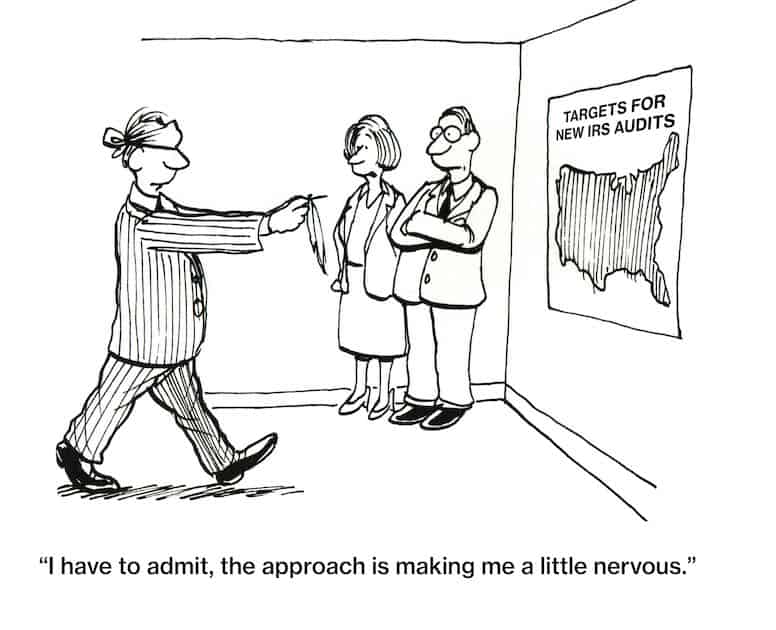
IRS Audit Cartoon

We covered many of the provisions of the new legislation, which the President signed into law on Aug. 16, 2022, in the first three parts of this four-part series:

Today’s Part 4 of this series covers additional provisions in the IRA ’22 that apply to increased IRS funding, drug pricing, and Affordable Care Act insurance premiums.

Increased IRS Funding

The Internal Revenue Service (IRS) has been underfunded for years. You may have experienced the ramifications of this underfunding if you ever tried to contact the IRS with a question or concern. But the lack of funding has also impaired the IRS’s ability to conduct audits and collect unpaid taxes.

The Inflation Reduction Act of 2022 provides an additional $80 billion to the IRS over 10 years to improve customer services and expand its enforcement and compliance efforts. The Congressional Budget Office estimates that these investments will raise an additional $124 billion from increased collections over a 10-year period.

Perhaps the most controversial aspect of this increased funding is what the IRS plans to do with it — hire and train up to 87,000 new IRS agents. While U.S. Secretary of the Treasury Janet Yellen has indicated that the additional funds will not be used to increase audits of people earning less than $400,000, it would be foolish to believe that such an increase in enforcement efforts would not be used to target regular, everyday taxpayers.

Warning: As soon as the IRS uses the increased funding to become fully staffed, we are confident that it will expand its enforcement efforts to small businesses and households making less than $400,000 per year.

Your best defense is Continue reading… Continue reading… Continue reading…

Demystifying the Inflation Reduction Act: Part 3 — Tax Implications for Businesses and Corporations

The Inflation Reduction Act of 2022 (IRA ’22) is generally considered to be ‘Build Back Better Light’ (note: we briefly covered the President’s ‘Build Back Better’ proposal in 2021 Year-End Tax-planning Tips for Business Owners here on the SWC blog.). Many of its provisions are clearly intended to offset the costs of transitioning to green energy for consumers, as explained in Part 1 and Part 2 of this four-part series.

However, the IRA ’22 also contains several provisions that apply specifically to businesses and corporations — some of which provide similar incentives for adopting green energy alternatives and others which clearly target businesses and corporations to increase tax revenue — presumably to help cover the cost of this Act.

In this, Part 3 of our series, we get down to business as we highlight what business owners and corporate leaders need to know about the IRA ’22.

Inflation Reduction Act's Tax Implications for Businesses and Corporations


Green Energy Tax Incentives: Extended and Revised

Many of the energy credits available to businesses before the enactment of the Inflation Reduction Act of 2022 have been extended and revised by the Act. Below are highlights of some of the changes made to existing business energy credits and incentives:

  • Revises the Internal Revenue Code (IRC) §179D Energy Efficient Commercial Buildings deduction as follows:
    • The deduction is increased for taxpayers who meet specified prevailing wage and apprenticeship requirements (see below) and decreased for taxpayers who do not. (For additional information on prevailing wages, visit the U.S. Department of Labor’s prevailing wages webpage.)
    • Allows additional increases for achieving specified energy savings targets.
    • Replaces the lifetime cap on the deduction with a three-year cap.
    • Updates the efficiency standards that must be met.
    • Allows tax-exempt entities, including governmental agencies, to allocate the deduction to the designer of the building or the qualified retrofit plan.
  • Modifies the Renewable Electricity Production Credit in the following ways: Continue reading… Continue reading… Continue reading…

Demystifying the Inflation Reduction Act: Part 2 — Energy Efficiency Credits and Rebates for Residents and Owners of Residential Property

The Inflation Reduction Act of 2022 (IRA ’22) has garnered a great deal of press, along with even more confusion and concern. Its provisions cover everything from offsetting the costs of the transition to green energy to helping consumers keep pace with the rising costs of health insurance and prescription medications.

To help you make sense of this massive piece of legislation, we are breaking it all down in this four-part series — “Demystifying the Inflation Reduction Act.”

Last week, we posted Part 1 of this series to explain the Clean Vehicle Credit — a tax credit intended to help offset the cost of certain new and used electric vehicles and electric hybrids.

  • Here, in Part 2 of this series, we stay with the theme of green energy by examining tax incentives and rebates intended to help residents and owners of residential property make their homes more energy efficient.
  • In Part 3, we shift our attention to provisions in the Act that apply to businesses.
  • And we wrap the series in Part 4 by covering a hodgepodge of other provisions, including tax incentives to help make healthcare more affordable and increased funding for the IRS.

The Residential Clean Energy Credit

In the Inflation Reduction Act of 2022, the Residential Energy Efficient Property Credit under Internal Revenue Code §25D (often referred to as the Solar Energy Credit) is renamed the “Residential Clean Energy Credit” and is extended to property placed in service prior to January 1, 2035.

nergy-Efficiency-Credits-and-RebatesPrior to passage of the Inflation Reduction Act, homeowners were entitled to a non-refundable tax credit for the use of solar electric panels, solar hot water heaters, fuel cells, small wind energy systems, geothermal heat pumps, and biomass fuel units they had installed for their homes.

That credit was in the process of being gradually reduced and then eliminated by the end of 2023. The Inflation Reduction Act retroactively returns the credit to 30 percent for the years 2022 through 2032 when it begins to phase out again and end after 2034. Those who qualify for the credit in 2022 receive a 30 percent credit rather than the expected 26 percent.

Electrifying: The Act’s battery storage technology is also added to the list of qualified expenditures eligible for the renamed credit and is applicable to expenditures made after December 31, 2022.

The Energy Efficient Home Improvement Credit

The Energy Efficient Home Improvement Credit essentially renames and modifies the Internal Revenue Code’s §25C Nonbusiness Energy Credit and extends it to apply to purchases of qualified property placed in service prior to January 1, 2033.

Notable changes introduced by the Energy Efficient Home Improvement Credit include the following and apply to property placed in service after December 31, 2022 and through December 31, 2032: Continue reading… Continue reading… Continue reading…

Demystifying the Inflation Reduction Act: Part 1 — The Clean Vehicle Tax Credit

By |2025-07-10T10:37:32-07:00August 26, 2022|Categories: Legislation, Tax Credits|Tags: , |0 Comments

Regardless of whether you approve of the most recent spending bill out of Washington D.C. or think that “Inflation Reduction Act” is a misnomer, now that it has been passed by Congress and signed by the President, it is law.

The best approach at this point for both individual and corporate taxpayers is to take advantage of the tax incentives that the legislation provides and identify the most effective ways to deal with new challenges presented by the legislation, such as the $80 million in additional funding for the Internal Revenue Service (IRS).

In this four-part series, “Demystifying the Inflation Reduction Act,” we highlight the key provisions in this bill that are likely to impact individuals, businesses, and corporations now and for years to come:

  • In this part, we cover the Clean Vehicle Credit for individual taxpayers.
  • In Part 2, we cover tax credits and rebates for offsetting the costs of making your home more energy efficient.
  • In Part 3, we focus our attention on various provisions in the bill that will impact businesses and corporations.
  • In Part 4, we cover other provisions in the bill, including tax incentives to help make healthcare more affordable and increased funding being allocated to the IRS.

Clean Vehicle Credit

Graphic for Clean Vehicle Tax Credit

The Act’s Clean Vehicle Credit replaces the current Qualified Plug-in Electric Drive Motor Vehicle Credit. It’s generally applicable to qualified electric vehicles, including plug-in hybrid electric vehicles (PHEVs) and hydrogen fuel cell electric vehicles (FCEVs) placed in service starting in 2023 through 2032. (PHEVs typically operate on electricity until the battery is depleted, at which point they run on gas. FCEVs are typically powered by hydrogen fuel cells.)

Key changes introduced in the Clean Vehicle Credit include but are not limited to the following: Continue reading… Continue reading… Continue reading…

First Look: The Biden Administration’s Proposed Tax Law Changes

When a new administration settles into the White House, you can be certain there will be proposals to change the nation’s tax code. And as Walt Disney once famously said, times and conditions change so rapidly that we must keep our aim constantly focused on the future. And that’s the aim of today’s post.

The fact that the Biden administration is planning to raise taxes is no surprise. The President campaigned on a promise to raise taxes on corporations (from 21 to 28 percent) and on wealthy Americans (those earning more than $400,000 per year). If you ever complained that politicians never follow through on their promises, this is the one exception — the Biden administration will raise taxes. The only question is how?

In late May 2021, the U.S. Treasury Department presented a sneak peek into the administration’s proposed tax law changes in the form of a 114-page document commonly referred to as the “Green Book.” The proposed changes are part of two plans — the American Jobs Plan, geared more toward businesses, and the American Families Plan, focusing on individuals. In this post, we explain many of the proposed changes and highlight how they might impact your taxes moving forward.

The key word here is proposed. It’s too early to tell exactly which proposed tax changes will become law or the extent to which they’ll be modified as they move through Congress. Regardless, here’s what we know about The American Jobs Plan and how it might impact businesses:

The American Jobs Plan

The primary objective of The American Jobs Plan is to create millions of jobs while rebuilding the country’s infrastructure and positioning the United States to out-compete nations like China. To raise revenue to pay for the plan, the administration is considering the following changes to tax law (note: generally, these changes would go into effect after the 2021 tax year): Continue reading… Continue reading… Continue reading…

Go to Top
