
What the Passage of the One Big Beautiful Bill Mean for You and Your Business

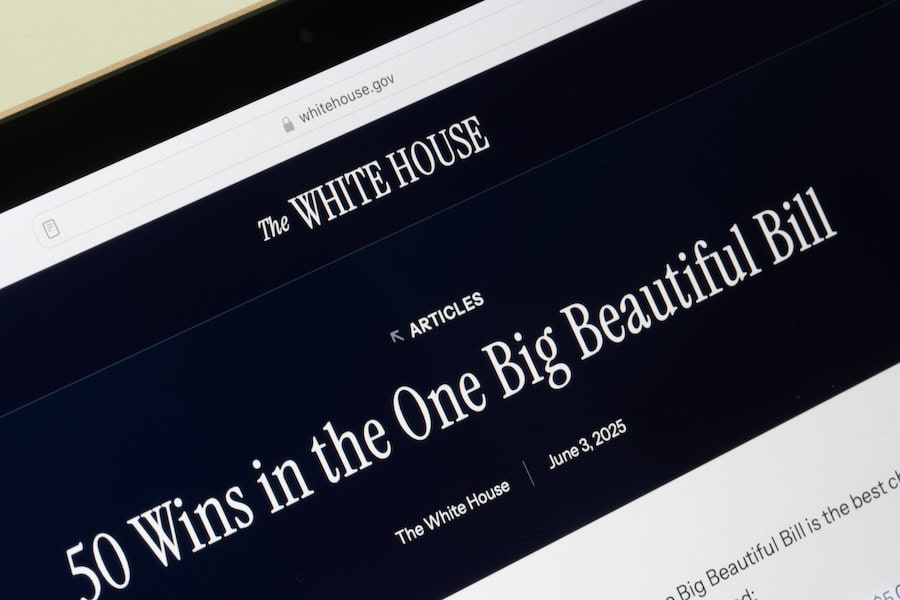
On July 3, 2025, Congress passed H.R. 1, a sweeping piece of tax legislation known as the One Big Beautiful Bill Act (OBBB). The OBBB is a nearly 1,000-page tax package aimed at preserving and expanding key provisions of the 2017 Tax Cuts and Jobs Act (TCJA) and so much more.

This pro-growth bill prevents the expiration of certain tax breaks while adding a host of new tax relief measures, including “no tax on tips,” “no tax on overtime pay,” “no tax on car loan interest,” and “no tax on Social Security.” It also provides tax incentives to businesses that manufacture in the U.S. and hire more U.S. workers, and it rolls back many of the green energy credits that we’ve written about in previous blog posts.

Graphic for One Big Beautiful Bill Legislation

This post summarizes the most important changes found in the new law, which was signed by the President on July 4, 2025, focusing on provisions that directly affect individual taxpayers (as compared to corporations). Understanding these updates is important, whether you’re a high net-worth individual or family member, an employee, a small-business owner or entrepreneur, a parent, or a retiree. Or maybe you just want to know how these tax code changes are likely to affect you and how you can maximize your tax savings legally.

Here’s what you need to know.

Individual Tax Rates and the Standard Deduction

The 2017 Tax Cuts and Jobs Act (TCJA) reduced most individual income tax rates. The 15 percent bracket dropped to 12 percent, the 25 percent bracket to 22 percent, the 28 percent bracket to 24 percent, the 33 percent bracket to 32 percent, and the top 39.6 percent bracket to 37 percent. The One Big Beautiful Bill Act (OBBB) locks in these rate structures permanently.

Tax Relief at a Cost? While tax relief is always welcome, according to the Congressional Budget Office (CBO), doing so will add $2.2 trillion to the federal deficit over the next decade.

The standard deduction, which was nearly doubled in 2017, is also made permanent by the OBBB and temporarily increased further for tax years 2025–2028:

  • $15,750 for single filers
  • $23,625 for heads of household
  • $31,500 for joint filers

This expansion reduces the number of itemizers and simplifies filing for most taxpayers. It is estimated to cost $1.4 trillion over 10 years, according to the CBO.

The Child Tax Credit

The 2017 Tax Cuts and Jobs Act (TCJA) doubled the Child Tax Credit from $1,000 to $2,000 per child. The OBBB makes this adjustment permanent, increasing it temporarily to $2,500 through 2028. Inflation adjustments begin in 2026. The $500 credit for non-child dependents also becomes permanent. These changes will cost an estimated $817 billion over 10 years, according to the CBO.

The Qualified Business Income (QBI) Deduction

To maintain parity between pass-through businesses and C corporations, the 2017 Tax Cuts and Jobs Act created a 20 percent deduction for qualified business income. The new law keeps this deduction and increases it to 23 percent starting in 2026. It also expands eligibility and adjusts phaseout thresholds to avoid income cliffs. Continue reading… Continue reading… Continue reading…

What That One Big, Beautiful Bill Act May Mean for You or Your Business

Depending on how you voted in 2024 or which media outlets you follow, you might think the One Big, Beautiful Bill Act (OBBBA) is either a historic win or a major letdown. Since clients have been asking for our take, we want to share what we know and believe about the bill.

Passed by the U.S. House of Representatives on May 22, 2025, and passed this morning by the United States Senate, the bill includes 300-plus provisions, including one that seeks to extend the provisions of the 2017 Tax Cuts and Jobs Act, which are set to expire at the end of 2025. But there’s much more to it than that.

Graphic for the One Big Beautiful Bill

While changes are expected as the legislation moves back to the House of Representatives for another vote, many provisions will likely survive the legislative process. This summary covers the main individual and business tax provisions broken down into the following four sections:

  • New above-the-line deductions (tips, overtime pay, and vehicle loan interest)
  • Business depreciation and expensing provisions (to encourage new investments in production property and equipment)
  • Business interest expense limitation (to prevent excessive interest deductions that would reduce a business’s taxable income too aggressively)
  • Clean energy credit rollbacks (to reduce subsidies for clean energy technologies)

New Above-the-Line Deductions

President Trump’s campaign promises are reflected in three above-the-line deductions proposed in the OBBBA. (An above-the-line deduction is one that reduces the adjusted gross income [AGI] used to calculate how much federal income tax is owed. It does not affect the amount of Social Security and Medicare tax owed.)

Here are the three new above-the-line deductions proposed in the OBBBA:

  1. A tax deduction for tip income (“no tax on tips”)
  2. A tax deduction for overtime pay (“no tax on overtime”)
  3. A tax deduction for interest paid on loans used to buy certain vehicles manufactured in the United States

Tax Deduction for Tip Income

The proposed “no tax on tips” deduction is for certain tips reported on W-2s and other tax forms. With one out of every 30 workers in the U.S. depending on tips to make ends meet, a tax deduction for tip income is an essential need for some.

Here are the requirements to qualify: Continue reading… Continue reading… Continue reading…
Year-End Tax-Savings Tips for Small-Business Owners and Entrepreneurs

By |2022-11-09T16:58:58-08:00November 9, 2022|Categories: Business Taxes|Tags: , , |1 Comment

Here at SWC, we’re currently meeting with clients to project what they’re likely to owe in 2022 and discuss ways that they can reduce their tax liability for this year and beyond. In preparation for these meetings, it’s always a good idea for clients to start thinking about steps they can take to lower their upcoming tax bill.

Last week, we presented 6 Personal Tax Savings Steps for Individuals to Take Now — Before End of Year 2022. This week, we turn our attention to tax-savings tips for small-business owners and entrepreneurs.

With only about two months remaining in 2022, time is quickly running out to take advantage of a few attractive tax deductions/credits available only to business owners and entrepreneurs. If you’re planning to delay taking on certain expenses until 2023, you may want to reconsider your approach after reading this post. Some deductions/credits may not be available in 2023, or they may be significantly reduced.

Take advantage now of larger deductions for business meals.

There are four steps that — if you take now — could result in considerable tax savings.

Step 1: Maximize your retirement plan contributions.

If your business already has a retirement plan, consider maximizing tax-deductible contributions before the end of the year. If your business doesn’t have a retirement plan, now’s a good time to consider starting one. With a retirement plan in place, you can make tax-deductible contributions to the plan that grow tax-free until the funds are withdrawn. A retirement plan is a great way for you and your employees to build wealth while reducing your tax burden.

You can set up various types of retirement plans, including the following: Continue reading… Continue reading… Continue reading…

4 Ways Businesses Can Save on Taxes in 2022

Every cloud has a silver lining. That’s especially true of the clouds that gather around business owners near tax time (which happens to be all the time, by the way). The tax code is highly complex.

According to one estimate, the federal tax code — at a whopping 2,652 pages — is 187 times longer than it was a century ago. The silver lining to all this? Within that highly complex tax code are the keys to the kingdom: unlocking enormous tax savings.

This is especially true for businesses, because government organizations at the federal, state, and local levels all want to stimulate business development. They know their funding is tied directly to the profits and personal income that those businesses generate. And the primary way governments stimulate business is by offering tax breaks and incentives.

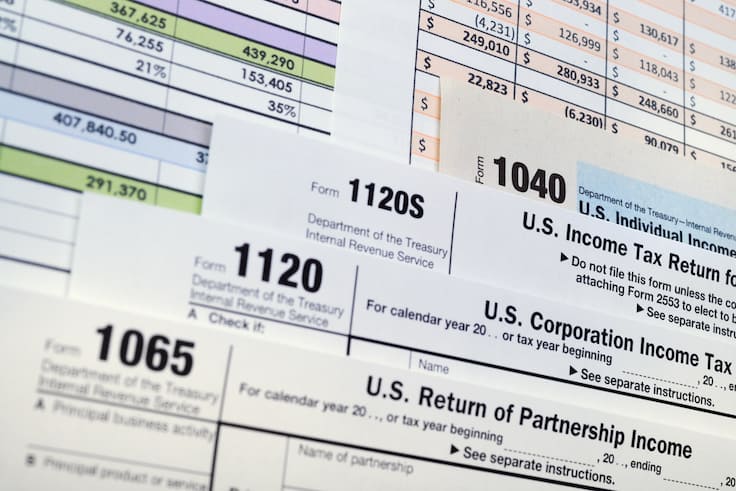
Tax Forms for Businesses

As a business owner, you can capitalize on those tax breaks by 1) knowing about them and 2) taking full advantage of them over the course of the tax year. That means not waiting until April 15 of the following year, when it may be too late.

In this post, we address four areas of focus for reducing your business taxes in the 2022 tax year. We also want you to consider asking your CPA or tax planning firm about scheduling a mid-year meeting for your business, because the steps you and your CPA take now will pay dividends in the Spring of 2023!

First up is a section of the tax code that allows you to deduct the cost of certain types of property as an expense, rather than requiring that the cost of the property to be capitalized and depreciated.

Section 179 Expense and Bonus Depreciation

The U.S. tax code provides different methods for writing off the cost of new or used machinery or equipment. Consider the following four options: Continue reading… Continue reading… Continue reading…
Go to Top
