
8 Year-End Tax-Savings Steps for Business Owners

If you own, operate, or participate in the managements of a business, taxes are always on your mind, especially at the end of every quarter, when estimated payments are due, and the end of the year, when you file your return. As tax year 2025 comes to a close, we at SWC are committed to helping you avoid any surprises while taking full advantage of all the tax breaks your business qualifies for.

Our recent post, “10 Year-End Tax-Savings Tips for 2025 for Individual Filers” revealed ways that any individual taxpayer can trim their tax bill. In this post, we focus our attention on tax-savings strategies specifically for business owners, starting with the often overlooked review of your businesses estimated tax payments.

1. Review Your Estimated Tax Payments

Finding out your business owes thousands, or tens of thousands of dollars, in taxes because it didn’t pay sufficient estimated taxes over the course of the year, and then having to pay a penalty on top of that, is one of the nasty surprises we want to help you avoid. You have one last chance to correct any shortfall. Here are a couple easy ways to calculate the amount of estimated tax you’re likely to owe:

  • Use last year’s percentage: If the business earned about the same amount of money this year as you did last year, look at the percentage of its income paid in taxes last year (federal, state, and local), and multiply that percentage by the company’s projected income for this year. For example, if the business earned about $200,000 last year and this year and paid 35 percent in combined income tax and self-employment tax last year, expect to pay about 35 percent this year. For a more accurate estimate, subtract business expenses from gross income before multiplying the percentage.
  • Use an online tax estimator: You can find plenty of federal income tax estimators online. However, most are helpful only for estimating the amount of federal income tax you’re likely to owe. The estimate is not likely to include your self-employment tax or state and local taxes. Many calculators are designed only for estimating taxes on employment income, not business income.

After estimating the total income and self-employment tax the business is likely to owe, subtract the amount of estimated tax you have already paid to determine the balances owed to the US Treasury and state and local tax agencies, and then pay those balances by Jan. 15, 2026.

2. Reduce Business Income with Business Expenses

Business expenses are one of the most effective tools for reducing taxable business income because they directly lower net profit (the amount the Internal Revenue Service (IRS) uses to calculate your company’s tax bill). Deductible expenses include the following:

  • Office supplies, software, and subscriptions
  • Equipment purchases
  • Vehicle expenses/mileage
  • Utilities, rent, phone, and internet
  • Contractor payments

Be sure to take advantage of Section 179 expensing, which enables businesses to immediately deduct the full cost of qualifying equipment and certain improvements in the year they’re placed in service instead of having to depreciate them over the course of several years.

For tax years beginning in 2025, your business can immediately deduct up to $2.5m of qualifying business property placed in service. This covers most equipment, off-the-shelf software, and certain improvements to commercial buildings (known as Qualified Improvement Property, or QIP).

Be aware of the following limitations:

  • For purchases made between Jan. 1 and Jan. 19, 2025, the business is only allowed to deduct 40 percent of the cost right away using bonus depreciation. But for anything purchased after Jan. 19, 2025, you can usually deduct 100 percent of the cost in the first year, as long as the asset is placed in service during 2025.
  • Section 179 cannot create a business loss.
  • The deduction phases out once total qualifying purchases exceed $4 million, disappearing completely at $6.5 million.
  • Rules get more complex for partnerships, S corporations, and LLCs taxed as either, so professional guidance from a the pros here at SWC may be needed.

Contact us for details on how the limits work and whether they will affect you or your business entity.

3. Set Up a Retirement Plan for Your Business (If You Haven’t Already)

If you don’t have a retirement plan for your business, you could be missing out on one of the most powerful tax-savings and wealth-building tools available. These plans allow you to make sizable tax-deductible contributions.

Most small businesses use defined contribution plans, such as the following, which are easier to manage than traditional pension plans: Continue reading… Continue reading… Continue reading…

Maximizing Your Business Auto Deductions: What You Need to Know

By |2025-03-03T11:45:04-08:00March 3, 2025|Categories: Business Taxes|Tags: |0 Comments

At SWC, we know that every tax deduction counts — and that’s especially true if you believe in tax planningand not tax reacting.

If you use a vehicle for business, understanding the rules around business-related auto deductions can help you make the most of your tax savings. Whether you’re a self-employed entrepreneur, a business owner, or managing a corporate fleet, choosing the right deduction method and tracking expenses properly is bound to lead to a successful outcome.

Photo for Maximizing Your Business Auto Deductions

Here’s what you need to know about business auto deductions, eligible expenses, and how to make sure you’re compliant while maximizing your savings. If at any time you have questions or are unsure about something, let us know. We can be reached by email at admin@swc.cpa, and during West Coast office hours by phone at (858) 487-4580.

Up first, how to properly deduct auto expenses for your business.

How to Deduct Business Auto Expenses

The United States Internal Revenue Service (IRS) allows business owners and self-employed individuals to deduct vehicle expenses using one of two methods:

  1. The Standard Mileage Rate
  2. The Actual Expense Method

Each has its own advantages, and the right choice depends on how much you drive for business and how you track expenses. Here’s what you need to know:

The Standard Mileage Rate: Simple & Straightforward

The standard mileage rate is the easiest way to deduct business vehicle expenses. Instead of tracking every individual expense, you multiply your business miles by the IRS mileage rate:

  • In 2024, the mileage rate was 67 cents per mile
  • In 2025, the mileage rate is 70 cents per mile

The mileage rate covers most of the costs of owning and using your car for business, including the fact that your car loses value over time (depreciation), plus gas, upkeep, insurance, and registration. But if you have to pay for parking or tolls while driving for work, you can still deduct those separately because they aren’t included in the mileage rate.

However, there are limitations:

  • You can’t use the standard mileage rate method if you’ve previously claimed depreciation using MACRS (Modified Accelerated Cost Recovery System) or Section 179 of the federal tax code.
  • You must use the standard mileage rate in the first year you use the vehicle for business if you want to use it in later years.

As you can see, the standard mileage rate method is ideal for business owners who drive a lot for work but don’t want to track every individual vehicle expense.

Pro Tip: Regardless of which method you use, keep a record of your odometer readings. When preparing your tax return, you’ll need to know the odometer reading of when you started using the vehicle for business and the odometer reading at the beginning of the tax year and the end of the tax year.

The Actual Expense Method: Maximizing Your Deductions

If you prefer a more detailed approach or have high vehicle costs, you may benefit from deducting actual vehicle expenses. These include:

  • Fuel and oil
  • Repairs and maintenance
  • Insurance
  • Depreciation (for owned vehicles)
  • Lease payments (for leased vehicles)
  • Registration and licensing fees
  • Garage rent and parking fees
  • Tolls

Warning: If your vehicle is used for both business and personal purposes, only the business-use percentage is deductible. For example, if 60 percent of your miles are for business, you can deduct 60 percent of your total vehicle expenses.

In our experience here at SWC, clients tell us that the actual expense method can be more complex but is often more beneficial for vehicles with high operating costs.

Commuting Versus Business Mileage: What’s Deductible?

Not all miles driven for work qualify as deductible business expenses. The IRS does not allow deductions for commuting, meaning the miles you log for traveling from home to your primary workplace and back do not qualify.

That said, it’s not all bad news on the commuting front, because the following are deductible:

  • Travel between multiple work locations if you have more than one job.
  • Travel to a temporary work site outside your usual metropolitan area.

If your vehicle’s use falls into one of these categories, you may be eligible for additional deductions. Here, a tax planning firm like ours can be extremely helpful in identifying the additional deductions for which you may qualify.

Warning: Some people still mistakenly believe that purchasing a vehicle through their business automatically qualifies it for substantial tax deductions, but that’s not how the rules work. A common misconception is that commuting to and from the office counts as business use, but it doesn’t. To qualify for deductions like bonus depreciation, the vehicle must be used 100 percent for legitimate business purposes, and commuting doesn’t qualify. So before you go out and buy a $65k Jeep Wagoneer for “business,” keep in mind that it doesn’t qualify for a deduction if the vehicle’s actual business use is closer to 10 percent. In other words, misclassifying personal use as business use can lead to audits, disallowed deductions, and a lot of unnecessary headaches.

Special Rules for Business-Owned Vehicles

If your corporation or business partnership owns a vehicle, the deduction must be based on actual expenses (i.e., the actual expense method). That’s because the business-use percentage must be calculated to determine how much of the expenses are deductible.

If you’re wondering about the personal use of a business vehicle and what impact that has on maximizing business auto deductions, here’s what you need to know:

  • If an employee (or S-corporation shareholder) uses a business vehicle for personal reasons, the value of personal use must be reported as taxable income on their W-2.
  • If the company reports 100 percent of vehicle costs as a business expense, personal use must be treated as additional compensation for the employee.

For partnerships, partners who are not reimbursed for vehicle expenses may deduct them on Schedule E (Form 1040 — Supplemental Income and Loss), but only if their partnership agreement explicitly states that reimbursements are limited or unavailable.

Depreciation & Luxury Vehicle Limits

If you own a high-value vehicle, there are IRS limits on how much depreciation you can claim. For 2025, the maximum depreciation deductions for a passenger vehicle are:

Bonus Depreciation & Heavy SUVs

Heavy SUVs (over 6,000 lbs. but under 14,000 lbs.) are not subject to standard depreciation limits. In 2024, up to $30,500 can be deducted immediately under Section 179 of the federal tax code.

This makes heavy SUVs a popular choice for business owners looking to maximize tax savings.

Leased Vehicles & Tax Deductions

If you lease a business vehicle, you can deduct the business-use portion of the lease payments. However, to prevent business owners from bypassing depreciation limits, the IRS requires an income inclusion if the leased vehicle’s fair market value exceeds $61,200 (that’s the 2025 limit).

This reduces the deductible portion of lease payments but allows businesses to still claim substantial deductions for leased vehicles.

Choosing the Right Method for You and Your Business

If you’ve made it this far and are still wondering whether the standard mileage rate or the actual expenses method is right for you, consider the following.

  • Standard Mileage Rate: Best for low-mileage business use and simpler recordkeeping.
  • Actual Expenses: Best for vehicles with high costs, business-owned vehicles, or when maximizing deductions is the goal.

Pro Tip: If you’re still unsure which method is best, track both mileage and actual expenses for the first year and compare potential deductions. If you need help, let us know.

Business auto deductions can be a powerful tax-saving tool, but they require careful tracking and compliance with IRS rules. Whether you’re self-employed, own a fleet of company cars, or just want to make sure you’re maximizing your deductions, our team of tax planning experts is here to help.

Have questions? Need guidance? Contact us today using the contact form on our website or call us during business hours at (858) 487-4580. We’ll make sure you’re on the right path for a smarter, more strategic approach to tax planning and wealth building.

Avoid Costly Mistakes with Pass-Through Entity Tax Payments

If you use the State of California’s Franchise Tax Board (FTB) website to make an electronic payment for an elective pass-through entity, you should know ahead of time that it’s easy to make a mistake and get mixed up over personal and business payments.

Here at SWC, a San Diego-based tax planning and financial strategy firm for entrepreneurs and small business owners, real estate investors, and high-net-worth individuals, we see this happening all too often. And that’s why in this post, we explain how California’s version of the elective pass-through entity tax works and provide guidance on how to avoid making costly mistakes when paying your elective tax.

Graphic for Pass Thru Entity Tax Payments

To start us off, if you’re unfamiliar with the elective pass-through entity tax, here’s what we want you to know.

Understanding the Elective Pass-Through Entity Tax

The Tax Cuts and Jobs Act (TCJA), which some have described as “the most sweeping tax overhaul in decades,” was signed into law on Dec. 22, 2017, just 50 days after it was first introduced in the U.S. House of Representative. Once enacted on Jan. 1, 2018, the TCJA limited the amount of state and local taxes (income taxes, sales taxes, and property taxes) that taxpayers are allowed to deduct when filing their federal income tax returns. This resulted in the cap being $10,000 for married couples and $5,000 for individuals (or married individuals who choose to file separately).

For example, suppose you’re a married couple living in California, and you paid $7,000 in state income taxes and $6,000 in property taxes. That’s $13,000 total. Under the TCJA, when you’re filing your federal income tax return, you would be able to deduct only $10,000 from your taxable income, not the full $13,000.

Understanding that this cap could be especially burdensome for taxpayers in states with high income taxes and/or high property taxes, some states, such as California, enacted an elective pass-through entity tax as a workaround. In California, this workaround is detailed in California Assembly Bill 150 — the Sales and Use Tax Law: Personal Income Tax Law: Corporation Tax Law: Budget Act of 2021.

A pass-through entity (PTE) is a legal business structure wherein income flows through to the business entity’s owners and investors, rendering the income of the entity as the income of the owners or investors. Pass-through entities include sole-proprietorships, limited liability companies (LLCs), partnerships, and S-corporations.

How California Elective Pass-Through Entity (PTE) Tax Works

California’s elective pass-through entity (PTE) tax isn’t very complicated, and here’s how it works: Continue reading… Continue reading… Continue reading…

The Top 10 Reasons Why Business Owners Need to Meet With a CPA This Summer

A few days ago here on the SWC blog, we shared why it’s important for individual taxpayers to meet with their CPA over the summer. It basically boils down to being prepared. No one wants to learn in the first quarter of 2025 that their state or federal tax liability could have been dramatically reduced or altogether eliminated had they just met with their CPA for one hour in June, July, or August.

As a business owner, the same logic applies. Below are the top 10 reasons why you as a business owner, entrepreneur, or an investor with an ownership stake in a business should schedule a mid-year meeting with your CPA this summer.

Marni Walker of SWC

  1. Take Advantage of Depreciation Tax Breaks: Current tax laws offer generous depreciation deductions for qualifying assets. By discussing your plans with us, we can help you maximize your Section 179 deductions and first-year bonus depreciation, potentially saving you significant amounts on your tax return.
  1. Time Business Income and Deductions: Strategically timing your business income and deductions can lead to substantial tax savings. Whether it’s deferring income or accelerating expenses, we’ll help you make the right moves to align with your financial goals.
  1. Maximize the Qualified Business Income (QBI) Deduction: The QBI deduction can be a significant tax saver for owners of pass-through entities. We’ll ensure you understand the complexities and limitations of this deduction, helping you plan to maximize your benefits.

Continue reading… Continue reading… Continue reading…

Year-End Tax-Savings Tips for Small-Business Owners and Entrepreneurs

By |2022-11-09T16:58:58-08:00November 9, 2022|Categories: Business Taxes|Tags: , , |1 Comment

Here at SWC, we’re currently meeting with clients to project what they’re likely to owe in 2022 and discuss ways that they can reduce their tax liability for this year and beyond. In preparation for these meetings, it’s always a good idea for clients to start thinking about steps they can take to lower their upcoming tax bill.

Last week, we presented 6 Personal Tax Savings Steps for Individuals to Take Now — Before End of Year 2022. This week, we turn our attention to tax-savings tips for small-business owners and entrepreneurs.

With only about two months remaining in 2022, time is quickly running out to take advantage of a few attractive tax deductions/credits available only to business owners and entrepreneurs. If you’re planning to delay taking on certain expenses until 2023, you may want to reconsider your approach after reading this post. Some deductions/credits may not be available in 2023, or they may be significantly reduced.

Take advantage now of larger deductions for business meals.

There are four steps that — if you take now — could result in considerable tax savings.

Step 1: Maximize your retirement plan contributions.

If your business already has a retirement plan, consider maximizing tax-deductible contributions before the end of the year. If your business doesn’t have a retirement plan, now’s a good time to consider starting one. With a retirement plan in place, you can make tax-deductible contributions to the plan that grow tax-free until the funds are withdrawn. A retirement plan is a great way for you and your employees to build wealth while reducing your tax burden.

You can set up various types of retirement plans, including the following: Continue reading… Continue reading… Continue reading…
4 Ways Businesses Can Save on Taxes in 2022

Every cloud has a silver lining. That’s especially true of the clouds that gather around business owners near tax time (which happens to be all the time, by the way). The tax code is highly complex.

According to one estimate, the federal tax code — at a whopping 2,652 pages — is 187 times longer than it was a century ago. The silver lining to all this? Within that highly complex tax code are the keys to the kingdom: unlocking enormous tax savings.

This is especially true for businesses, because government organizations at the federal, state, and local levels all want to stimulate business development. They know their funding is tied directly to the profits and personal income that those businesses generate. And the primary way governments stimulate business is by offering tax breaks and incentives.

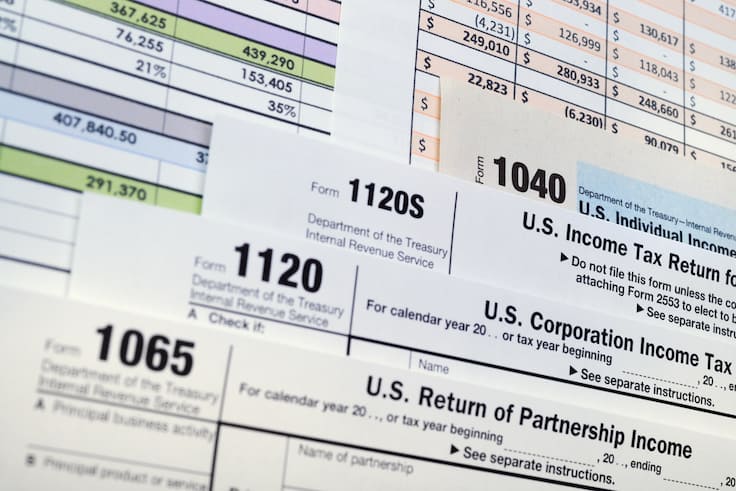
Tax Forms for Businesses

As a business owner, you can capitalize on those tax breaks by 1) knowing about them and 2) taking full advantage of them over the course of the tax year. That means not waiting until April 15 of the following year, when it may be too late.

In this post, we address four areas of focus for reducing your business taxes in the 2022 tax year. We also want you to consider asking your CPA or tax planning firm about scheduling a mid-year meeting for your business, because the steps you and your CPA take now will pay dividends in the Spring of 2023!

First up is a section of the tax code that allows you to deduct the cost of certain types of property as an expense, rather than requiring that the cost of the property to be capitalized and depreciated.

Section 179 Expense and Bonus Depreciation

The U.S. tax code provides different methods for writing off the cost of new or used machinery or equipment. Consider the following four options: Continue reading… Continue reading… Continue reading…

Taking Advantage of the Work Opportunity Tax Credit (WOTC)

By |2021-11-03T15:39:33-07:00November 3, 2021|Categories: Business Taxes|Tags: |0 Comments

Need an incentive to hire a veteran or someone from an underserved demographic? You need to know about the Work Opportunity Tax Credit (WOTC) — a federal tax credit of up to $9,600 for employers who hire people from specific groups facing significant barriers to employment. (Tax-exempt employers can claim the WOTC against their payroll taxes.)

The WOTC creates an incentive for business owners to increase workplace diversity while providing the unemployed and underemployed with access to good jobs. If you’re a business owner or you manage a business for someone else, the WOTC provides you with the opportunity to grow your workforce at a discount as the economy recovers.

Jointly administered by the Internal Revenue Service (IRS) and the Department of Labor (DOL), the Work Opportunity Tax Credit is available for wages paid to certain individuals who begin work on or before Dec. 31, 2025. Under this program, participating companies receive a tax credit of between $2,400 and $9,600 per new qualifying hire.

Best of all, originally scheduled to expire at the end of 2020, the Consolidated Appropriation Act (CAA) extended the WOTC through December of 2025.

Screening Job Applicants

To take advantage of the Work Opportunity Tax Credit, you’ll need to screen applicants to ensure that they qualify. To qualify, employees must meet the following criteria:

  • Be a new hire, not an existing employee or previous employee being rehired
  • Belong to one of the qualified groups (see list below)
  • Perform at least 400 hours of service for the employer (employees who perform at least 120 hours of service may qualify for a partial credit)

Warning: Note that an employee’s wages cannot be used for both the WOTC and the COVID-19 employee retention credit. The same wages cannot be counted twice.

To screen job applicants, create a WOTC questionnaire that they must complete and submit with their application. Your WOTC questionnaire needs to collect details that enable you to determine whether an applicant is a member of one of the qualifying groups: Continue reading… Continue reading… Continue reading…

First Look: The Biden Administration’s Proposed Tax Law Changes

When a new administration settles into the White House, you can be certain there will be proposals to change the nation’s tax code. And as Walt Disney once famously said, times and conditions change so rapidly that we must keep our aim constantly focused on the future. And that’s the aim of today’s post.

The fact that the Biden administration is planning to raise taxes is no surprise. The President campaigned on a promise to raise taxes on corporations (from 21 to 28 percent) and on wealthy Americans (those earning more than $400,000 per year). If you ever complained that politicians never follow through on their promises, this is the one exception — the Biden administration will raise taxes. The only question is how?

In late May 2021, the U.S. Treasury Department presented a sneak peek into the administration’s proposed tax law changes in the form of a 114-page document commonly referred to as the “Green Book.” The proposed changes are part of two plans — the American Jobs Plan, geared more toward businesses, and the American Families Plan, focusing on individuals. In this post, we explain many of the proposed changes and highlight how they might impact your taxes moving forward.

The key word here is proposed. It’s too early to tell exactly which proposed tax changes will become law or the extent to which they’ll be modified as they move through Congress. Regardless, here’s what we know about The American Jobs Plan and how it might impact businesses:

The American Jobs Plan

The primary objective of The American Jobs Plan is to create millions of jobs while rebuilding the country’s infrastructure and positioning the United States to out-compete nations like China. To raise revenue to pay for the plan, the administration is considering the following changes to tax law (note: generally, these changes would go into effect after the 2021 tax year): Continue reading… Continue reading… Continue reading…

Maximizing Your PPP Benefits and Employer Tax Credits

In 2020, Congress passed a flurry of COVID-19 related legislation designed to help employers retain and pay their employees and stay in business. This relief has been offered primarily in two forms:

  • Paycheck Protection Program (PPP): PPP loans have been made available to qualifying small businesses to help them stay afloat and retain and pay as many of their employees as possible. A business receiving a PPP loan can then apply to have the loan forgiven; that is, whatever portion of the loan was used for qualifying payroll and expenses.
  • Employer tax credits: Additional employer tax credits have been made available to help employers cover the cost of sick and family leave for employees, employees who need to care for someone with coronavirus (including a child whose school or daycare is closed due to the coronavirus), and retaining employees when operations have been partially or fully suspended due to government orders during the pandemic.

Understanding and taking full advantage of these benefits within the parameters stipulated in the legislation can be challenging for small-business owners. At SWC, we’re here to help.

In this post, we provide an overview of the COVID-19 pandemic relief programs for which your business may be eligible. When preparing your business tax returns this year, your accountant or CPA should be asking you for copies of payroll tax returns and should be initiating additional consultations with you to see if you are eligible for any of the new employer tax credits. We say should because that’s how we handle this at SWC.

Wait! Before You File Your 2020 Tax Return, Read This

Don’t rush to file your 2020 tax returns. Consult with us first for three important reasons:

  1. Both the PPP and the new employer tax credits provide potentially significant benefits for your business, and we want to make sure you reap the maximum benefit.
  2. The new employer tax credits cannot be claimed on the same payroll being used for the PPP loan forgiveness. When completing your tax return and submitting documents for PPP loan forgiveness, you need to be sure you’re not confusing the two benefits.
  3. Your state may not follow all the federal guidelines. We can help ensure that your state taxes account for any differences.

If you feel pressured to file your 2020 tax returns and are uncertain about any of the details related to the PPP or new employer tax credits, we strongly encourage you to file for an extension. With that recommendation in mind, it’s important that you take the time to consult with your tax advisor.

Sorting Out PPP Rounds 1 and 2

Congress provided two rounds of PPP loans — one in the spring of 2020 and another near the end of 2020. If you have taken advantage of the PPP, you should understand the rules and the differences between the two rounds (or “draws.”)

Important: The Coronavirus Aid, Relief and Economic Security (CARES) Act, enacted in March 2020, was silent on whether expenses paid with the proceeds of first draw PPP loans could be deducted. The IRS took the position that these expenses were nondeductible. However, the Consolidated Appropriations Act, 2021 (CAA, 2021), enacted at the end of 2020, provides that expenses paid from the proceeds of both first and second draw PPP loans are Continue reading… Continue reading… Continue reading…

Go to Top
