
8 Year-End Tax-Savings Steps for Business Owners

If you own, operate, or participate in the managements of a business, taxes are always on your mind, especially at the end of every quarter, when estimated payments are due, and the end of the year, when you file your return. As tax year 2025 comes to a close, we at SWC are committed to helping you avoid any surprises while taking full advantage of all the tax breaks your business qualifies for.

Our recent post, “10 Year-End Tax-Savings Tips for 2025 for Individual Filers” revealed ways that any individual taxpayer can trim their tax bill. In this post, we focus our attention on tax-savings strategies specifically for business owners, starting with the often overlooked review of your businesses estimated tax payments.

1. Review Your Estimated Tax Payments

Finding out your business owes thousands, or tens of thousands of dollars, in taxes because it didn’t pay sufficient estimated taxes over the course of the year, and then having to pay a penalty on top of that, is one of the nasty surprises we want to help you avoid. You have one last chance to correct any shortfall. Here are a couple easy ways to calculate the amount of estimated tax you’re likely to owe:

  • Use last year’s percentage: If the business earned about the same amount of money this year as you did last year, look at the percentage of its income paid in taxes last year (federal, state, and local), and multiply that percentage by the company’s projected income for this year. For example, if the business earned about $200,000 last year and this year and paid 35 percent in combined income tax and self-employment tax last year, expect to pay about 35 percent this year. For a more accurate estimate, subtract business expenses from gross income before multiplying the percentage.
  • Use an online tax estimator: You can find plenty of federal income tax estimators online. However, most are helpful only for estimating the amount of federal income tax you’re likely to owe. The estimate is not likely to include your self-employment tax or state and local taxes. Many calculators are designed only for estimating taxes on employment income, not business income.

After estimating the total income and self-employment tax the business is likely to owe, subtract the amount of estimated tax you have already paid to determine the balances owed to the US Treasury and state and local tax agencies, and then pay those balances by Jan. 15, 2026.

2. Reduce Business Income with Business Expenses

Business expenses are one of the most effective tools for reducing taxable business income because they directly lower net profit (the amount the Internal Revenue Service (IRS) uses to calculate your company’s tax bill). Deductible expenses include the following:

  • Office supplies, software, and subscriptions
  • Equipment purchases
  • Vehicle expenses/mileage
  • Utilities, rent, phone, and internet
  • Contractor payments

Be sure to take advantage of Section 179 expensing, which enables businesses to immediately deduct the full cost of qualifying equipment and certain improvements in the year they’re placed in service instead of having to depreciate them over the course of several years.

For tax years beginning in 2025, your business can immediately deduct up to $2.5m of qualifying business property placed in service. This covers most equipment, off-the-shelf software, and certain improvements to commercial buildings (known as Qualified Improvement Property, or QIP).

Be aware of the following limitations:

  • For purchases made between Jan. 1 and Jan. 19, 2025, the business is only allowed to deduct 40 percent of the cost right away using bonus depreciation. But for anything purchased after Jan. 19, 2025, you can usually deduct 100 percent of the cost in the first year, as long as the asset is placed in service during 2025.
  • Section 179 cannot create a business loss.
  • The deduction phases out once total qualifying purchases exceed $4 million, disappearing completely at $6.5 million.
  • Rules get more complex for partnerships, S corporations, and LLCs taxed as either, so professional guidance from a the pros here at SWC may be needed.

Contact us for details on how the limits work and whether they will affect you or your business entity.

3. Set Up a Retirement Plan for Your Business (If You Haven’t Already)

If you don’t have a retirement plan for your business, you could be missing out on one of the most powerful tax-savings and wealth-building tools available. These plans allow you to make sizable tax-deductible contributions.

Most small businesses use defined contribution plans, such as the following, which are easier to manage than traditional pension plans: Continue reading… Continue reading… Continue reading…

The Top 10 Reasons Why Business Owners Need to Meet With a CPA This Summer

A few days ago here on the SWC blog, we shared why it’s important for individual taxpayers to meet with their CPA over the summer. It basically boils down to being prepared. No one wants to learn in the first quarter of 2025 that their state or federal tax liability could have been dramatically reduced or altogether eliminated had they just met with their CPA for one hour in June, July, or August.

As a business owner, the same logic applies. Below are the top 10 reasons why you as a business owner, entrepreneur, or an investor with an ownership stake in a business should schedule a mid-year meeting with your CPA this summer.

Marni Walker of SWC

  1. Take Advantage of Depreciation Tax Breaks: Current tax laws offer generous depreciation deductions for qualifying assets. By discussing your plans with us, we can help you maximize your Section 179 deductions and first-year bonus depreciation, potentially saving you significant amounts on your tax return.
  1. Time Business Income and Deductions: Strategically timing your business income and deductions can lead to substantial tax savings. Whether it’s deferring income or accelerating expenses, we’ll help you make the right moves to align with your financial goals.
  1. Maximize the Qualified Business Income (QBI) Deduction: The QBI deduction can be a significant tax saver for owners of pass-through entities. We’ll ensure you understand the complexities and limitations of this deduction, helping you plan to maximize your benefits.

Continue reading… Continue reading… Continue reading…

4 Ways Businesses Can Save on Taxes in 2022

Every cloud has a silver lining. That’s especially true of the clouds that gather around business owners near tax time (which happens to be all the time, by the way). The tax code is highly complex.

According to one estimate, the federal tax code — at a whopping 2,652 pages — is 187 times longer than it was a century ago. The silver lining to all this? Within that highly complex tax code are the keys to the kingdom: unlocking enormous tax savings.

This is especially true for businesses, because government organizations at the federal, state, and local levels all want to stimulate business development. They know their funding is tied directly to the profits and personal income that those businesses generate. And the primary way governments stimulate business is by offering tax breaks and incentives.

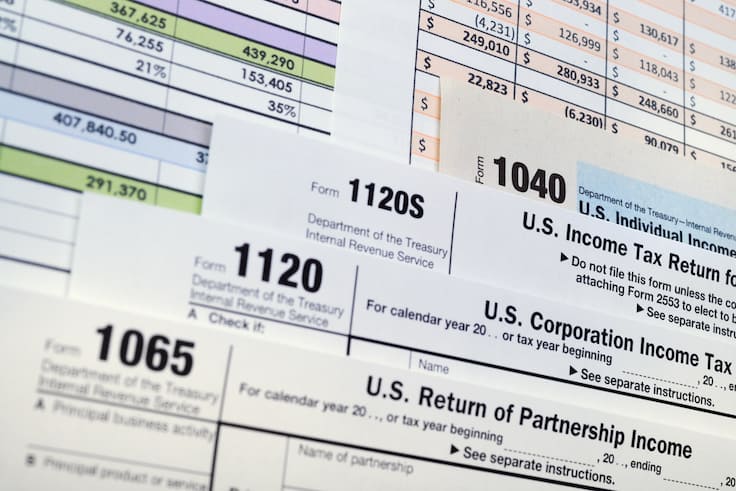
Tax Forms for Businesses

As a business owner, you can capitalize on those tax breaks by 1) knowing about them and 2) taking full advantage of them over the course of the tax year. That means not waiting until April 15 of the following year, when it may be too late.

In this post, we address four areas of focus for reducing your business taxes in the 2022 tax year. We also want you to consider asking your CPA or tax planning firm about scheduling a mid-year meeting for your business, because the steps you and your CPA take now will pay dividends in the Spring of 2023!

First up is a section of the tax code that allows you to deduct the cost of certain types of property as an expense, rather than requiring that the cost of the property to be capitalized and depreciated.

Section 179 Expense and Bonus Depreciation

The U.S. tax code provides different methods for writing off the cost of new or used machinery or equipment. Consider the following four options: Continue reading… Continue reading… Continue reading…
Go to Top
