

If you’re an owner or manager of one of the more than 5 million U.S. businesses that received a loan under the Paycheck Protection Program (PPP) — you can now have that loan converted to a grant and forgiven.
However, if you don’t apply for PPP loan forgiveness within 10 months after the last day of the covered period for the loan your business received, then the possibility of deferment ends. At that point, your business will be required to begin making loan payments to your PPP lender.
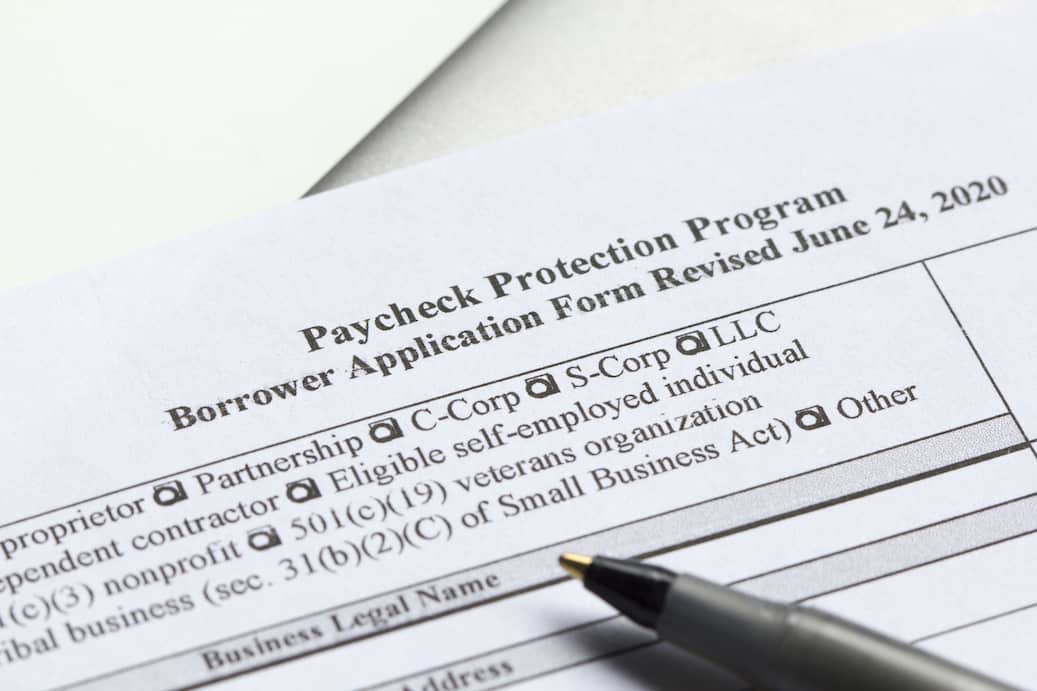
If your business is a Paycheck Protection Program borrower, it is eligible for loan forgiveness if you used the funds for eligible payroll costs, business mortgage interest payments, rent, or utilities during either the 8- or 24-week period after you received the loan.
Paycheck Protection Program Loan Basics
For the uninitiated, the Paycheck Protection Program (PPP) is a $659-billion economic relief program established as part of the Coronavirus Aid, Relief, and Economic Security (CARES) Act to help small businesses, self-employed workers, sole proprietors, certain nonprofit organizations, and tribal businesses remain solvent and continue paying their workers during the COVID-19 pandemic. Under the PPP, a qualifying small business (generally with fewer than 500 employees) could obtain a loan of up to $10 million at a very low interest rate (1 percent) and have the loan forgiven after proving that the money was used for qualified payroll and other expenses.
The following table provides an overview of the PPP Loan program.
Paycheck Protection Program Loan Overview |
|
|---|---|
| Maximum loan amount |
Equal to lesser of:
or
|
| Payroll costs defined |
Payroll costs are the sum of the following payments:
|
| Who’s eligible |
Businesses, including nonprofits, that:
Includes corporations, partnerships, LLCs, sole proprietorships, self-employed individuals, and independent contractors (including gig workers); however, partners do not qualify for their own PPP loan.
A business only needs to self-certify that a loan is necessary due to economic uncertainty caused by COVID-19 (loans of $2 million or more will be reviewed to determine eligibility).
|
| Loan forgiveness | Forgiveness is available for the portion of the loan proceeds used for payroll costs, mortgage interest, rent, and utilities for up to 24 weeks, provided at least 60 percent of the loan proceeds are used for payroll costs. Borrowers must apply for loan forgiveness through their lender — forgiveness is not automatic. |
| Use of loans |
Loans can be used to pay:
Agreements/arrangements for rent/lease payments, utilities, and mortgage interest must have been in place prior to Feb. 15, 2020, to be eligible.
|
| Payment deferral | Loan payments, including principal, interest, and fees, are deferred until the SBA remits the borrower’s loan forgiveness amount to the bank or 10 months after the last day of the covered period. |
| Loan conditions |
|
For more about the Paycheck Protection Program, please see our previous post “Get Ready for the Paycheck Protection Program NOW!”
What’s the Deadline to Apply for PPP Loan Forgiveness?
The PPP loan forgiveness application forms (3508, 3508EZ, and 3508S) specify an expiration date of Oct. 31, 2020, in the upper-right corner, but that date is not the deadline for borrowers to apply for forgiveness.
You can apply for PPP loan forgiveness as soon as you have used all loan proceeds for which you are requesting forgiveness. You may submit a loan forgiveness application any time before the maturity date of the loan, which is either two or five years from loan origination.
Important: If you do not apply for loan forgiveness within 10 months after the last day of your loan forgiveness covered period, loan payments are no longer deferred, and you’re required to start making payments on the loan.
For example, if your covered period ends on Oct. 30, 2020, you have until Aug. 30, 2021, to apply for forgiveness before you’re required to start making loan payments.
How to Apply for PPP Loan Forgiveness
Your business applies for PPP loan forgiveness through your Paycheck Protection Program lender. To get started, take the following steps:
- Obtain the required Paycheck Protection Program loan forgiveness form from your PPP lender.
Your Lender can provide you with either the SBA Form 3508, SBA Form 3508EZ, SBA Form 3508S, or the lender’s equivalent. The 3508EZ and the 3508S are shortened versions of the application for borrowers who meet specific requirements. For additional guidance on how to complete and submit the form, ask your Paycheck Protection Program lender.
- Gather your payroll and non-payroll documentation.
Payroll documentation for all payroll periods that overlapped with the Covered Period or the Alternative Payroll Covered Period. Payroll documentation includes the following:
- Bank account statements or reports from a third-party payroll service provider showing the cash compensation paid to employees.
- Tax forms (or equivalent reports from a third-party payroll service provider) for the periods that overlap with the Covered Period or the Alternative Payroll Covered Period:
- Payroll tax filings reported, or that will be reported, to the IRS (typically, Form 941)
- State quarterly business and individual employee wage reporting and unemployment insurance tax filings reported, or that will be reported, to the relevant state
- Payment receipts, cancelled checks, or account statements documenting the amount of any employer contributions to employee health insurance and retirement plans that the borrower included in the forgiveness amount.
Non-payroll documentation for expenses that were incurred or paid during the covered period and showing that obligations or services existed prior to Feb. 15, 2020. Non-payroll documentation covers the following:
- Business mortgage interest payments: Account statements from your lender showing receipt of mortgage interest payments or a copy of the lender’s amortization schedule and receipts verifying payments.
- Business rent or lease payments: Copy of current lease agreement and receipts or canceled checks verifying eligible payments.
- Business utility payments: Copies of invoices and receipts, canceled checks, or account statements.
Additional documentation may be required. Contact your lender or visit the U.S. Small Business Administration (SBA) Paycheck Protection Program website for a complete list of requirements, instructions, and forms.
- Complete the loan forgiveness application form you obtained from your lender in Step 1 and submit the form and all required documentation to your PPP lender.
Consult your lender for additional guidance.
- Continue to communicate with your lender throughout the process.
If the SBA reviews your loan, your lender will notify you of the review and the SBA loan review decision. You have the right to appeal certain SBA loan review decisions. Your lender is responsible for notifying you of the forgiveness amount paid by SBA and the date on which your first payment will be due, if applicable.
Of course, if you are one of our San Diego tax planning firm customers, we can work directly with your Paycheck Protection Program lender to complete the necessary paperwork for you and ensure that you file for PPP loan forgiveness before loan payments come due. What’s important is that you contact your PPP lender or us soon, so that you don’t miss any important deadlines.
– – – – – – – – –
Disclaimer: The information in this blog post about Paycheck Protection Program loan forgiveness is provided for general informational purposes only and may not reflect current financial thinking or practices. No information contained in this post should be construed as financial advice from the staff at Stees, Walker & Company, LLP, nor is this the information contained in this post intended to be a substitute for financial counsel on any subject matter or intended to take the place of hiring a Certified Public Accountant in your jurisdiction. No reader of this post should act or refrain from acting on the basis of any information included in, or accessible through, this post without seeking the appropriate financial planning advice on the particular facts and circumstances at issue from a licensed financial professional in the recipient’s state, country or other appropriate licensing jurisdiction.
Leave A Comment