
Summer 2026 Tax Updates Business Owners, Investors & California Taxpayers Should Know

Summer may feel like a quiet time for tax planning, especially after the spring filing rush. In reality, some of the most important tax planning windows open midyear, when business owners, real estate investors, individuals, and families still have time to make informed decisions before the end of the year.

This summer, several federal tax updates deserve attention. Some involve deadlines. Others are focused on Internal Revenue Service (IRS) account access, digital assets, qualified small business stock (QSBS), Health Savings Accounts (HSAs), disaster relief, and Employee Retention Credit claims (refundable tax credits for businesses and non-profits that kept employees on their payroll during pandemic-related government shutdowns or significant revenue declines). And for California taxpayers, the state’s Franchise Tax Board (FTB) identity verification notices deserve a closer look.
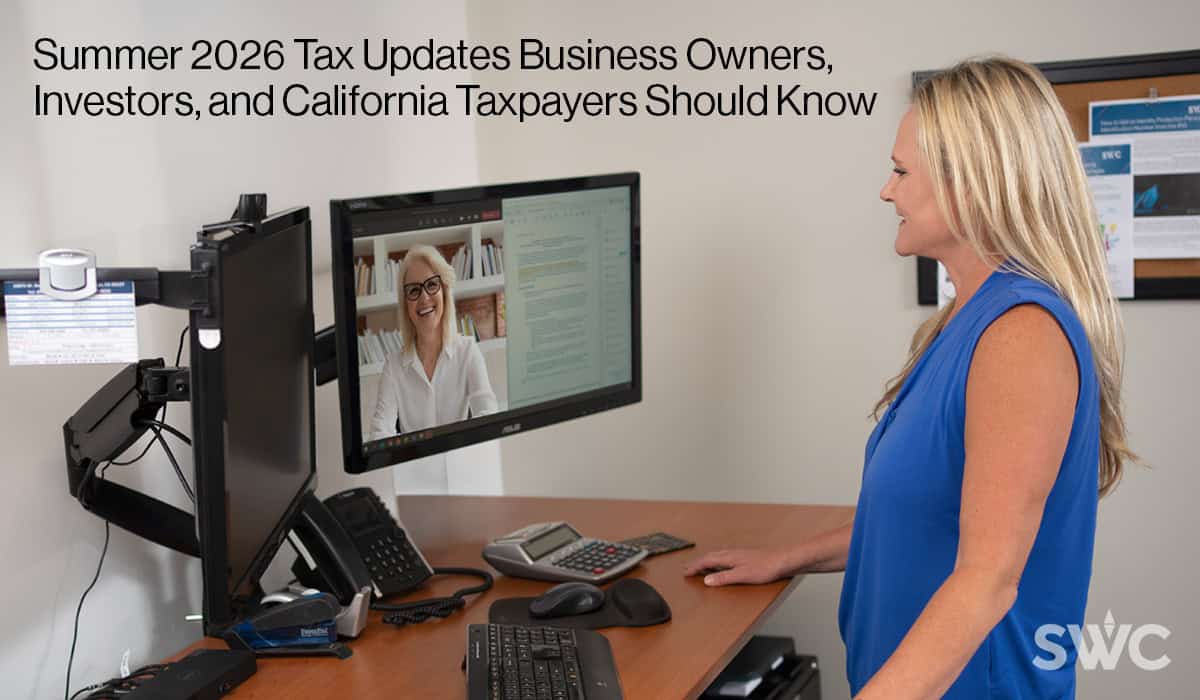
In this post, we explain what has changed, who may be affected, and what steps you may need to take before the next tax season catches you by surprise. First up, summer deadlines.

Summer 2026 Tax Deadlines for Individuals and Business Owners

Two July deadlines stand out for taxpayers and business owners.

First, July 6, 2026, marks the deadline for certain Section 174 elections tied to research and experimental expenditures. These rules may matter for businesses with software development, product development, engineering, scientific research, or other innovation-related costs.

Second, July 10, 2026, marks an extended deadline tied to possible COVID-era refund claims for penalties and interest. This deadline stems from litigation involving whether certain filing and payment deadlines received automatic disaster-related postponement during the COVID-19 disaster period (Jan. 20, 2021 – July 10, 2023).

Here’s what that means in plain English: Some taxpayers who paid penalties or interest connected to COVID-era filing or payment timing may have a potential refund claim. The rules remain technical, and the IRS may challenge claims depending on the facts, so it’s best to ask about this during your Summer 2026 Mid-Year Tax Appointment with us here at SWC.

IRS Business Tax Account Access: What Business Owners Should Review in Summer 2026

The IRS has continued to expand online access for business taxpayers. For S corporations and C corporations, certain individuals, known as Designated Officials, can use the IRS Business Tax Account to view information such as Continue reading… Continue reading… Continue reading…

Midyear Tax Planning for Small Businesses: How to Reduce Your 2026 Tax Bill

If you’re like most small-business owners, taxes probably aren’t even a blip on your radar screen right now. After all, you just filed your tax returns on April 15, so why bring up taxes less than two months later?

The reason? Summer is the best time to take a fresh look at your business tax situation. With several months remaining in the year, you have time to make adjustments that could reduce your 2026 tax bill, improve cash flow, reduce tax liabilities, and help you avoid unpleasant surprises next spring. The important thing is to act before year-end. Many of the most effective tax-saving and wealth-building strategies work best when implemented well in advance, not in a last-minute scramble in December.

Last week, we presented forward-looking advice for saving on personal income taxes. This week, we shift our attention to helping small-business owners keep more of their hard-earned profits. The following tax-saving strategies and tactics can help you identify opportunities, evaluate your options, and position your business for a stronger financial finish to 2026.

Maximize Your Qualified Business Income (QBI) Deduction

One of the most valuable tax breaks available to many business owners is the Qualified Business Income (QBI) deduction. It allows many owners of pass-through businesses to deduct up to 20 percent of their business income right off the top. For example, if your business generates $100,000 in qualified business income, you may be able to deduct up to $20,000 and pay federal income tax on the remaining $80,000. Pass-through businesses (income passes through the business to the owners) include:

  • Sole proprietorships
  • Single-member limited liability companies (LLCs)
  • Partnerships
  • Multi-member LLCs
  • S corporations

Here are a few key details about the QBI deduction: Continue reading… Continue reading… Continue reading…

Get a Jump on Your 2026 Taxes with Mid-Year Tax Planning

With your April 15 tax filing still visible in your rearview mirror, the last thing you probably want to think about is next year’s tax return. After weeks of gathering documents and tracking down deductions, it’s understandable if your thinking has shifted from tax planning to planning your summer vacation.

But summer is one of the best times to take a fresh look at your tax situation. The pressure of filing season is behind you, and you still have plenty of time before year-end deadlines start looming. Small adjustments made now can add up to considerable savings on next year’s tax bill.

A little planning during the summer months can pay dividends leading up to April 15, 2027. Whether you’re hoping to reduce your tax bill or avoid unpleasant surprises next year, we are here to help with your mid-year tax planning. That way, you can fully enjoy your summer, confident that your tax situation is well in hand.

In this post, we share several tax-planning strategies to consider as we head into summer 2026.

Graphic for a blog post about planning ahead for a 2026 tax filing.

Review Your Tax Withholdings or Estimated Tax Payments

Taxes have a way of sneaking up on people. A raise, a side gig, a new deduction, or even a change in family circumstances can throw you off course. The result? An unwelcome surprise come spring. The first order of business is to make sure you’re sending the right amount of money to the taxing authorities throughout the year in the form of tax withholdings and/or estimated tax payments:

  • Tax withholdings: Use the IRS Tax Withholding Estimator at to figure out the right amounts to have your employer(s) withhold (and remit) to taxing authorities on your behalf. You’ll need recent pay stubs (for you and your spouse, if you’re married), details of other income, and your most recent tax return (which can be very helpful in helping you gauge whether you’re underpaying or overpaying).
  • Estimated tax payments: If you’re self-employed or have additional income from a side job or another source, you should be making quarterly estimated tax payments to both federal and state tax agencies. Start with your expected total annual income, subtract any deductions (or the standard deduction), and estimate your tax based on applicable tax brackets. Then, subtract any withholdings from your day job income. Don’t overlook Social Security income and income from other sources.

Reconsider Standard Versus Itemized Deductions

If you normally claim the standard deduction, consider itemizing. If you normally itemize, consider claiming the standard deduction. For 2026: Continue reading… Continue reading… Continue reading…

Go to Top
