

With the federal income tax return filing deadline fast approaching (April 18, 2022, for the 2021 tax year), every day you don’t have your taxes filed can send your psyche soaring to new levels of anxiety.
Maybe you’re waiting for addition documentation — a corrected 1099 perhaps, or a schedule K1. Or maybe you’re a born procrastinator. Whatever the reason, give your anxieties a break, because the feds (and most state taxing authorities) will give you a two-month grace period.
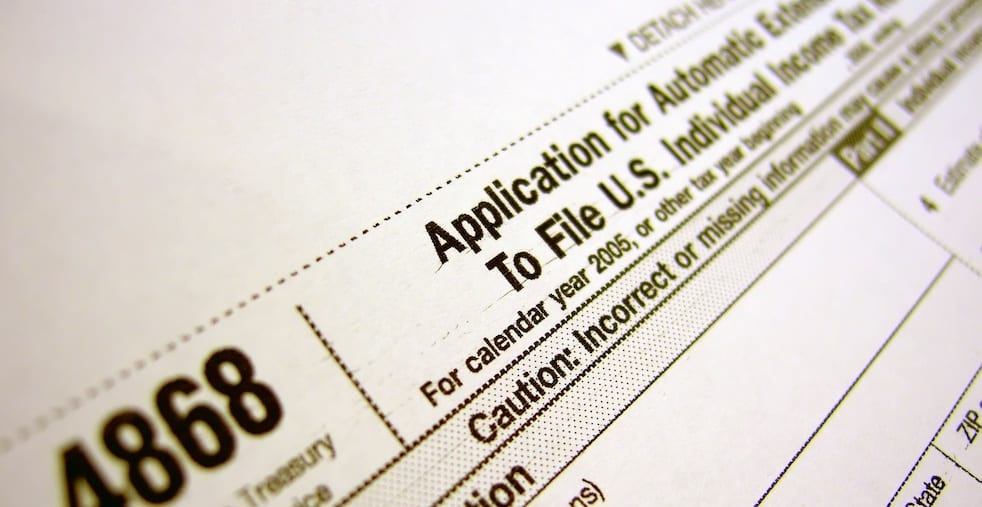
What’s the catch? Actually, there are two important stipulations:
- First, you need to apply for an extension by filing Form 4868 with the IRS. The deadline for submitting this form is the same as the deadline for filing your taxes.
- Second, you must pay what you owe. This is usually the dealbreaker, because most people don’t know what they owe until they (or their CPA firm or accountant) prepare their tax return. So, if you’re going to file for an extension, you need to estimate what you owe and pay that when you file for the extension. If you crunch the numbers and are fairly certain you’ll get a refund, then no worries — meaning you don’t have to pay more money than you’ll eventually get back. However, if you owe anything, you’ll be charged penalties and interest for underpayment of taxes.
In this post, I answer the most commonly asked questions about tax extensions that we receive here at SWC. If your tax extension question isn’t answered below, drop our office a note using our online Contact form, or call us during business hours at (858) 487-4580.
Tax Filing Extensions FAQs
Q: What if my application for a tax filing extension is rejected?
A: Tax filing extensions are automatically granted when you file your application, so you need not be concerned about having your application rejected.
Q: If I request a tax filing extension, when will I need to file my tax return?
A: Traditionally, when you file for an extension, you are granted two (2) additional months to file your tax return. This year, that extended deadline is well past the two-month timeline — it is Monday, Oct. 17, 2022.
Q: Do I need to file for a tax extension with my state?
A: In most states, filing for an extension with the IRS automatically extends the time to complete a state income tax return. For example, in California, no application is required for an extension to file if you submit a federal tax extension application. In California, taxpayers have an automatic six-month extension to file their returns. Other states have other rules, so ask your accountant or consult your state’s website for details.
Remember: An extension provides additional time to file, but not additional time to pay. Penalties may be assessed if sufficient payment is not remitted at the time you file for the extension.
Q: Why should I file for an extension?
A: Here are a few good reasons you might want to file for an extension:
- You or your accountant needs more time to prepare an accurate return. Filing later may be less costly and easier than rushing and possibly needing to file an amended return later.
- Pending legislation or government guidance could impact some aspects of your return, so filing an application for an extension just makes good sense.
- Waiting will enable you to qualify for additional retirement planning opportunities or give you additional time to fund certain types of retirement plans (for example, a Simplified Employee Pension individual retirement account [SEP IRA]).
Q: Why did my accountant or CPA recommend filing for an extension?
A: Your accountant or CPA firm may recommend filing for an extension for a variety of reasons, including the following:
- Documents required to complete your return are not available or will not arrive in time to complete the return by the filing deadline.
- The volume of data/documentation or the complexity of one or more transactions (such as the sale of a rental property) requires additional time.
- Pending legislation or guidance is likely to impact certain aspects of your return.
- Your accountant’s workload prevents them from completing and submitting all clients’ returns and extensions by the filing deadline. That is unlikely here at SWC, because we have our own deadlines for clients to submit their tax information. That way we can plan our workload accordingly and process timely and accurate returns.
Q: What are the chances that I’ll be audited if I don’t file by the April deadline?
A: Filing by the extended deadline will not increase your chances of the IRS or state authorities auditing your tax filings. In fact, it may decrease your risk of being audited by ensuring that you file an accurate return that you have had sufficient time to review carefully before submitting.
Q: I decided to obtain a filing extension. What should I do next?
A: Next steps include the following:
- Obtain all documentation you need to file your return.
- If you are hiring someone to prepare your return, do so as early as possible and provide that person with all the documentation necessary to prepare your return.
- Estimate and pay any taxes you think you will owe by the original filing deadline of April 18, 2022.
- If you are required to make quarterly estimated tax payments, be sure to make the first quarterly payment for the 2022 tax year by April 18. Your accountant or CPA may recommend that you pay the balance due for last year and your first quarterly estimated tax payment for this year when you file for your extension.
- If you are expecting a large refund, consider completing and filing your return as soon as possible to avoid giving the government an interest-free loan.
Many taxpayers get hung up on the idea of filing by the April deadline, which is understandable — it is a deadline after all. However, like most deadlines, this one can be pushed out when necessary for the good of all parties.
An extension provides a little breathing room, and as long as you pay what you owe by the original filing deadline, that breathing room can give you the time you need to prepare and file an accurate return that protects your rights and maximizes the tax deductions and credits for which you qualify. Look at an extension, not as a failure to file on time, but as an opportunity to file the most accurate tax return possible.
————–
About the Author: Marni Walker, CPA, is a founding partner of SWC — an independently owned tax planning and financial strategy advisory firm for small-business owners, real estate investors, and high-net-worth individuals. With a background in accounting and banking and a focus on analyzing new and proposed tax laws and regulations, Marni is SWC’s leader for accountant education, tax procedure, and legacy planning.
Disclaimer: The information in this blog post about tax file extensions is provided for general informational purposes only and may not reflect current financial thinking or practices. No information contained in this post should be construed as financial advice from the staff at SWC (Stees, Walker & Company, LLP), nor is this the information contained in this post intended to be a substitute for financial counsel on any subject matter or intended to take the place of hiring a Certified Public Accountant in your jurisdiction. No reader of this post should act or refrain from acting on the basis of any information included in, or accessible through, this post without seeking the appropriate financial planning advice on the particular facts and circumstances at issue from a licensed financial professional in the recipient’s state, country or other appropriate licensing jurisdiction.
Leave A Comment