
About Office Staff

The team at SWC simplifies complex tax issues, helps you build and leverage your wealth to enhance your personal and financial freedom, and offers unparalleled peace of mind at every step along the way.

How to Get an Identity Protection Personal Identification Number from the IRS

While con artists love tax season, 2020 marked the first year since at least 2014 that tax-related identity theft was not included on the Internal Revenue Service’s (IRS) “Dirty Dozen” list of tax scams. However, it remains a threat to all taxpayers, yourself included. All the bad guys need to do is file your tax return before you do and redirect your refund to their bank account.

Commissioner Rettig’s words ring true (see image above), especially when you stop to consider that the COVID-19 pandemic has increased online activity for many of us. As a result, it stands to reason that con artists are increasing their online activity as well, and capitalizing on our increased exposure to online identity theft.

One of the tools the IRS offers taxpayers to help in the fight against tax-related identity theft is the Identity Protection Personal Identification Number (IP PIN)— a six-digit number that the IRS is authorized to assign to eligible taxpayers. The number is known only to the taxpayer and the IRS, and it’s meant to prevent identity thieves from filing fraudulent tax returns using the taxpayer’s Social Security Number (SSN).

As the IRS puts it, the IP PIN locks your federal tax account, and serves as the key to opening that account. So, if you file electronically and your submission doesn’t contain the correct IP PIN, it will be Continue reading… Continue reading… Continue reading…

The Potential Tax Implications of COVID-19 Legislation

By |2021-02-26T14:11:03-08:00February 10, 2021|Categories: COVID-19|0 Comments

The dark clouds of the coronavirus pandemic continue to hang heavy over all of us, but even these clouds have a silver lining. The Consolidated Appropriations Act (CAA), signed into law on Dec. 27, 2020, provides for a second round of stimulus payments ($600 per taxpayer and qualifying child), an expansion of the Paycheck Protection Program (PPP), and numerous tax provisions and extensions that benefit both individuals and businesses.

The 2021 tax year brings additional relief in the form of increased contribution limits to retirement accounts, an increase in the standard deduction, and increases in other tax-related limitations and thresholds. (Under our country’s tax code, the standard deduction is a dollar amount that non-itemizers may subtract from their income before income tax is applied.)

In this post, we highlight recent tax provisions, extensions, limits and thresholds you should be aware of as you prepare your 2020 taxes and plan for the coming 2021 tax year.

CAA Provisions for Individuals, Payroll, and Businesses

Consolidated Appropriations Act (CAA) provisions apply to individuals, payroll, and businesses, as presented in the following sections.

Provisions for Individual Taxpayers

The CAA offers the following benefits for individual taxpayers: Continue reading… Continue reading… Continue reading…

How to Get PPP Loan Forgiveness

By |2021-02-03T17:18:36-08:00February 3, 2021|Categories: Taxes|Tags: , |0 Comments

If you’re an owner or manager of one of the more than 5 million U.S. businesses that received a loan under the Paycheck Protection Program (PPP) — you can now have that loan converted to a grant and forgiven.

However, if you don’t apply for PPP loan forgiveness within 10 months after the last day of the covered period for the loan your business received, then the possibility of deferment ends. At that point, your business will be required to begin making loan payments to your PPP lender.

If your business is a Paycheck Protection Program borrower, it is eligible for loan forgiveness if you used the funds for eligible payroll costs, business mortgage interest payments, rent, or utilities during either the 8- or 24-week period after you received the loan.

Paycheck Protection Program Loan Basics

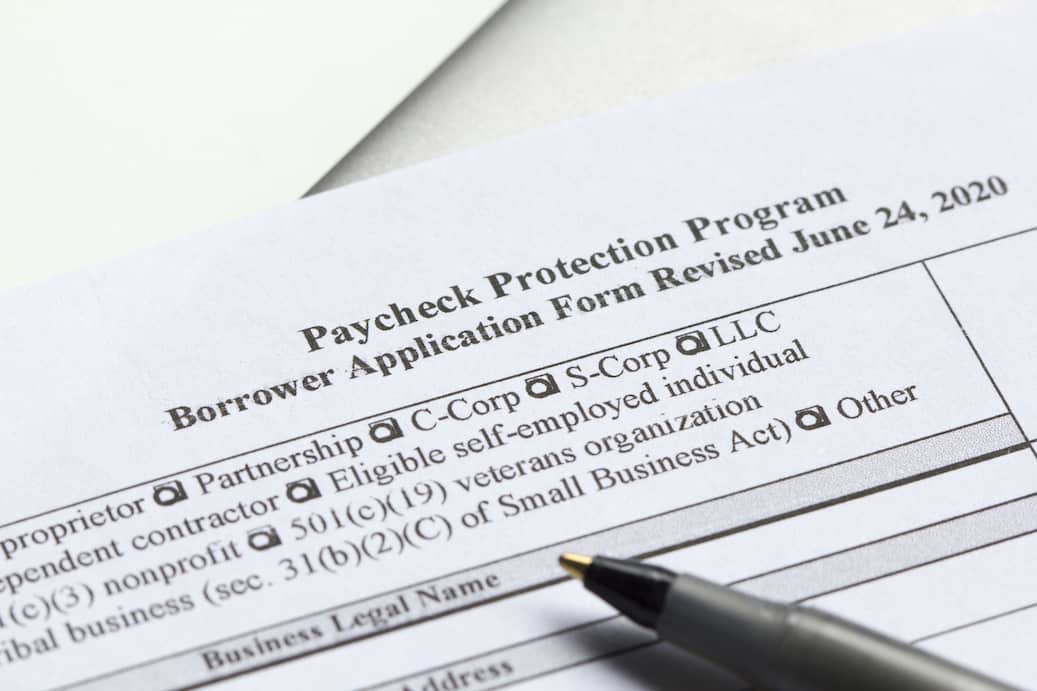
For the uninitiated, the Paycheck Protection Program (PPP) is a $659-billion economic relief program established as part of the Coronavirus Aid, Relief, and Economic Security (CARES) Act to help small businesses, self-employed workers, sole proprietors, certain nonprofit organizations, and tribal businesses remain solvent and continue paying their workers during the COVID-19 pandemic. Under the PPP, a qualifying small business (generally with fewer than 500 employees) could obtain a loan of up to $10 million at a very low interest rate (1 percent) and have the loan forgiven after proving that the money was used for qualified payroll and other expenses.

The following table provides an overview of the PPP Loan program. Continue reading… Continue reading… Continue reading…
The Return of IRS Form 1099-NEC

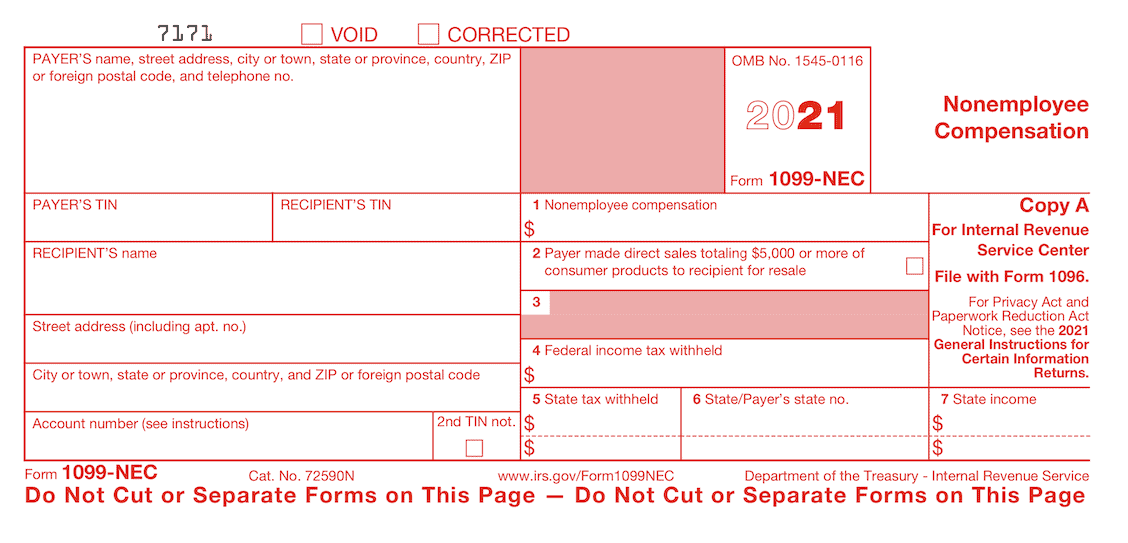
Over the past 40 years or so, large and small businesses alike have been using Form 1099-MISC (short for miscellaneous income) to report payments of $600 or more in a calendar year to independent contractors, freelancers, sole-proprietors, and other self-employed individuals. Prior to that, these same businesses used Form 1099-NEC (short for non-employee compensation) for that purpose.

Well, the IRS (Internal Revenue Service) is turning the clock back to the 1980s with the return of Form 1099-NEC.

IRS Form 1099-NEC

We can honestly say we didn’t see this one coming. In fact, we thought that the return of Form 1099-NEC was about as likely as, say, a third Bill and Ted movie. Well, we were wrong on both counts. And the funny coincidence is that the return of the 1099-NEC and the release of the third movie (Bill and Ted Face the Music) have both occurred in the same year — 2020, as if this year wasn’t already peculiar enough.

Taking a Closer Look at Form 1099 MISC

Before we look at what changed in 2020 regarding Form 1099-MISC, let’s take a look at what we have all become accustomed to for nearly four decades. Since 1982, businesses that have paid non-employees for their work have issued them a Form 1099-MISC in lieu of a W-2 form (required to report employee compensation).

For the past 38 years, most businesses have been using the 1099-MISC form to report any payments to independent contractors, freelancers, sole-proprietors, and other self-employed individuals who met any of the following three criteria: Continue reading… Continue reading… Continue reading…

Why You Should Schedule a Year-End Tax Projection Meeting

By |2020-11-05T20:36:22-08:00November 5, 2020|Categories: Uncategorized|0 Comments

Only two months remain between now and the end of the fourth and final quarter of 2020. Many of us will be happy to be looking back at 2020 in our rearview mirrors, but in regard to taxes — now is the time to start looking forward to 2021 and beyond. The next two months are just as important as the next two years for maximizing your tax savings.

Schedule a Year-End Tax Projection Meeting

This two-month period is the best time to review any changes in state and/or federal tax law and regulations that could affect how, when, and how much you pay in taxes. During our scheduled tax projection appointment, we will review your current personal, family, and business situations; identify tax-saving opportunities for the coming year; and address any tax questions or concerns you may have.

In addition, if you’re concerned about your tax balance due April 15, 2021, our year-end tax projection can give you a sense of what you can expect to owe or get back in 2020 taxes and consider some year-end techniques that can trim your tax bill or boost your tax refund.

You don’t want to be blind-sided by a tax bill you can’t pay. And if you paid enough (or too much) in estimated taxes, that’s good to know, too — not only for your peace of mind, but also so you can leverage that knowledge for additional tax savings and for your future business and personal financial planning.

Whether you’re a client of ours or another tax planning or financial strategy firm, you should engage in a year-end tax projection session, because the financial decisions and actions you take over the coming months can have a significant impact on your finances for years to come. However, very few people engage in such planning, or they do so without professional guidance. As a result, we suspect that many people miss out on opportunities to Continue reading… Continue reading… Continue reading…
Calculating Tax Withholding and Estimated Taxes, Part 11: Small Business Guide to Reducing Your Tax Burden Legally

Nobody looks forward to paying taxes, but it’s less painful when tax withholdings are calculated by an employer and automatically withheld from your pay. Much easier than crunching the numbers ourselves and then paying the government out of our savings. Somehow, the latter process feels like we’re working for Uncle Sam, and that’s not a pleasant feeling.

Here in the United States, ours is a pay-as-you-go tax system, meaning we taxpayers are expected and required to pay taxes on our income as we earn it — instead of paying it all at once at the end of the year. Employees have taxes automatically withheld from their paychecks by their employers, which satisfies the taxing authority’s requirement.

In contrast, if you’re a small-business owner, you face the onerous task of calculating your income and expenses, estimating the amount of tax owed on that amount, and cutting checks (or making electronic payments) for the amounts due to state and federal entities. These include the Franchise Tax Board here in California, and/or the Internal Revenue Service (IRS). And, you’re required to repeat this process four times a year, to pay your businesses quarterly estimated federal, state, and local taxes.

No one wants to get stuck with a huge tax bill (and penalties) at the end of the year. Nor do we want to overpay, which is essentially giving the government a free loan while leaving ourselves and our business with less of the money we earned. As small-business owners ourselves, we at Stees Walker & Company, LLP, feel your pain, so in this part of our Small Business Guide to Reducing Your Tax Burden Legally — the 11th in our 12-part series — we lead you through the process of estimating your taxes, hopefully making it a little less painful. But first, we need cover a few preliminary topics.

Understanding Tax Withholdings and Estimated Taxes

According to the IRS, “Taxes must be paid as you earn or receive income during the year, either through withholding or estimated tax payments.” Withholdings are taxes an employer collects on behalf of the taxing authorities and sends to them on behalf of the employee. Estimated taxes are generally those paid quarterly based on a business entity’s expected business income. Taxpayers are required to pay estimated taxes in the following situations:

  • The amount of income tax withheld from your salary or pension is not enough.
  • You receive additional income such as interest, dividends, alimony, self-employment income, capital gains (for example, from selling stock for a profit), prizes, and awards from which taxes have not been withheld.
  • You are in business for yourself, in which case the estimated taxes you pay cover not only the income tax you owe but also self-employment tax and alternative minimum tax (if applicable).

If you don’t pay enough tax through withholding and estimated tax payments, you may be charged interest, calculated weekly, on what you should have paid. You also may be charged interest if your estimated tax payments are late, even if you are due a refund when you file your tax return.

To avoid having to pay interest, you must deposit a certain minimum amount by the end of the year: Continue reading… Continue reading… Continue reading…

Deducting the Costs of Business Meals, Entertainment, and Gifts, Part 10: Small Business Guide to Reducing Your Tax Burden Legally

As a small-business owner, you know that you can easily rack up a considerable amount in expenses over the course of the year dining with and entertaining clients, colleagues, and partners. Then there’s hosting “free” seminars or presentations for prospective clients. And feeding your employees (for example, donuts and coffee for a morning meeting or pizza and soft drinks for a team that’s working overtime on a project). You may even have additional expenses related to gifts presented to customers and vendors to show your appreciation for their business and efforts on your behalf.

All this is money leaving the business and not going into your pocket, so it should be deductible, right? Yes, it is, but just how deductible it is depends on the context in which that money is spent and who received the benefit.

In this post — No. 10 of 12 in our Small Business Guide to Reducing Your Tax Burden Legally series — we break down business deductions for meals, entertainment, and gifts, to ensure that you’re taking full advantage of what the government allows, taking care to not do something that may prompt the government to question any of your deductions.

Deducting Meals, Entertainment, and Gifts

Deducting the Cost of Meals Out

If you’re in a business such as management consulting, marketing services, insurance, or personal finances, you likely spend considerable time meeting with clients over lunch, coffee, or drinks. In other businesses, you may meet with partners or colleagues to discuss plans for business ventures or projects you’re currently working on together. As long as meals you pay for under either of those scenarios are for a legitimate business purpose — with existing clients, new business prospects, and business colleagues such as vendors you work with — they’re deductible.

Costs for business meals (food and beverage) are generally deductible up to 50 percent, but expenses must meet the following conditions: Continue reading… Continue reading… Continue reading…

Deducting Qualifying Car and Truck Expenses, Part 9: Small Business Guide to Reducing Your Tax Burden Legally

Did you know that if you have a motor vehicle and a business, you may have a tax deduction coming your way? It’s true. In many cases, you can deduct from your business profits the cost of buying, driving, and maintaining that vehicle. And if you use it exclusively or almost exclusively for work, you may be able to get the government to pay a good chunk of the expenses related to that vehicle (in the form of money you save on taxes).

That’s only fair. Every penny you put into driving to deliver product or perform a service for your customers is a penny out of your business profits!

In this blog post, Part 9 in our Small Business Guide to Reducing Your Tax Burden Legally series, we cover how it may be possible to claim a deduction on a qualifying car, truck and related expenses.

Two Ways to Claim Vehicle Expenses

In these United States, the Internal Revenue Code provides for two different ways to claim vehicle expenses:

  • Actual expenses: You claim the business use percentage (BUP) of all expenses related to a vehicle, including fuel cost, auto insurance, lease payments (or loan interest and depreciation), personal property tax, repairs/maintenance (oil changes, tires, etc.), and car washes. For example, suppose you use a vehicle 75 percent for business and 25 percent for personal use, and your total vehicle expenses are $8,000 for the year. Your deduction would be $8,000 x 0.75 = $6,000.
  • Standard mileage: You multiply the number of miles you drove the vehicle for business by the standard per-mile rate, which is 57.5 cents for the year 2020. For example, if you put 8,000 business miles on a vehicle 8,000 x 57.5 = $4,600. Using this method, you can also deduct the business use percentage of vehicle registration fees and taxes, vehicle loan interest, and tolls and parking fees. (Note: You cannot use the standard mileage method if you use five or more vehicles in your business, or you use your vehicle for hire; for example, taxi, Lyft, Uber, etc.)

Many small-business owners choose the standard mileage option because it’s so straightforward in terms of calculations and record-keeping. All you need is your odometer meter reading at the beginning and end of the year and a log of the number of miles you drove for business (which you should keep regardless of the method you use to calculate your deduction). You don’t need a receipt for every time you fuel up or take your vehicle in for an oil change.

However, using the easy method could cost you money. Every year, the American Automobile Association (AAA or more commonly “Triple A”) conducts in-depth research into vehicle operating costs. If you’re choosing to take the standard deduction for a vehicle that costs more than 57.5 cents/mile, could be losing money by not claiming your Continue reading… Continue reading… Continue reading…

Maximizing Your Home Office Deduction, Part 8: Small Business Guide to Reducing Your Tax Burden Legally

If you’re self-employed or run a small business out of your home, you can reduce your income tax bill by claiming a home office deduction. This deduction enables you to subtract from your income a portion of expenses attributable to the area of your home that you use for business.

For example, if you run a pet grooming business out of 20 percent of your home and use that other 80 percent as living space, under the right circumstances, you may be able to deduct 20 percent of your mortgage interest, property taxes, homeowner’s insurance, homeowner association fees, and utilities (such as electricity, gas, water, sewer, and trash). You might even be able to deduct depreciation on that portion of your home.

Hey, it’s only fair. Other businesses get to deduct the cost of maintaining a building or renting office space, so you should get a tax break for the portion of your home you use for conducting business.

Unfortunately, many small-business owners don’t claim this deduction because they fear that doing so will raise red flags and increase their odds of becoming a target for a dreaded tax audit. Others avoid claiming it because they’re afraid that the calculations or record-keeping would be too complicated. However, the calculations and record-keeping are straightforward, and there’s no evidence that claiming the home office deduction increases your odds of being audited. Besides, as long as you’re honest about the business use of your home, and you have records to back up the expenses you claim, even if you do get audited, you have nothing to fear.

In addition to being able to claim the home office expense, if you are using your home office as the base for business auto mileage, it is a good idea to establish your home office as your “tax home.” This supports your claim for auto expenses any time you travel from your home office to another business location.

Pro Tip: You may be able to use expenses associated with a home office to reduce self-employment income and taxable income from your business — but not below zero. If your home office expenses for a particular year are more than your net income from your business, you may be able to carry forward the loss to future years.

Deciding Whether Your Office Space Qualifies

To qualify for a home office deduction, a portion of your home must be used in one of the following ways:

  1. Exclusively and regularly as your principle place of business
  2. Exclusively and regularly as a place where you meet and deal with your customers in the normal course of your business
  3. A separate structure that’s not attached to your home and is used exclusively and regularly in connection with your business
  4. On a regular basis, the space is used for storage of inventory or product samples used in your business for selling products at retail or wholesale (note: this usage does not have to be exclusive)
  5. For rental use
  6. As a daycare facility

Let’s translate this into plain English: Continue reading… Continue reading… Continue reading…

Go to Top